Welcome to Universum.luUniversum · The astronomy portal
Messier catalogue · Open cluster

M45 The Pleiades

Pleiades: use a very wide field.

Record an observation →
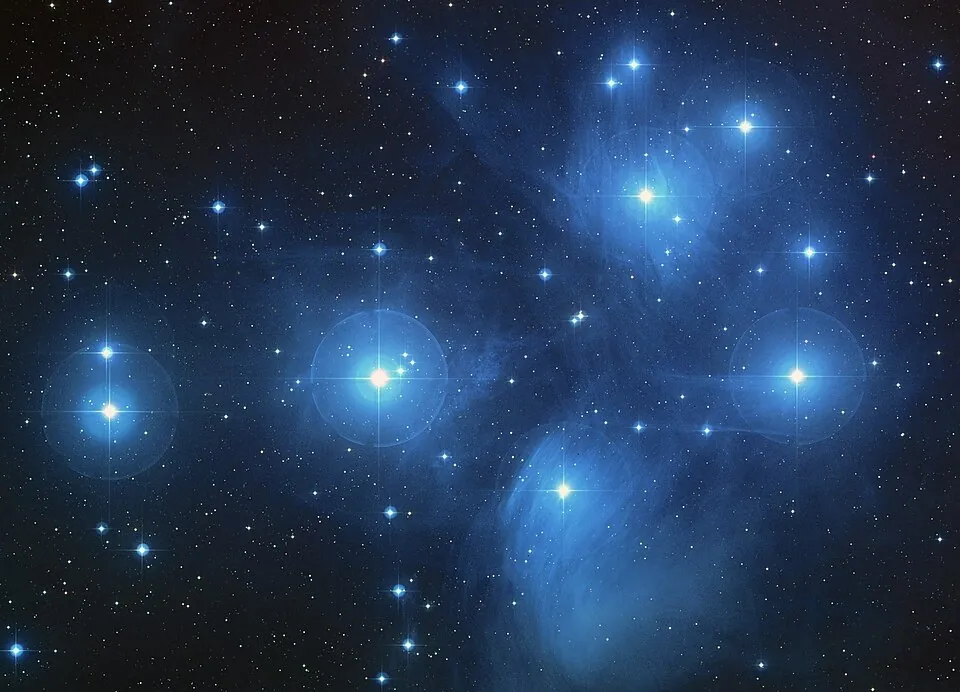
Photograph of M45 — The Pleiades
Photograph from volume II · The field may be partial and the colours may result from processing. Credits and source.

Essential information

Category
Open cluster
Constellation
Taurus (Tau)
Alternative designation
Melotte 22
Right ascension / declination
03h47 / +24°07′
Visual magnitude
1,2
Indicative distance
≈ 445 al

RA / Dec.: J2000, rounded to the nearest minute. ly = light-year; M ly = million light-years; ≈ = approximate value; — = not available.

At the eyepiece

Plan this observation

Pleiades: use a very wide field.

Locating guide from the bookAround η Tau (wide field).

N, S, E and W indicate cardinal directions; combinations give a more precise direction. Greek letters identify the constellation’s guide stars. Check the route on a suitable chart.

Photographs help you recognise structures, but do not predict the view through an eyepiece. Detection depends on the sky, the object’s altitude and your instrument.

Sources and credits

Fact sheet adapted from Comprendre comment explorer le ciel, volume II by Steve Cimolino, version dated 17 October 2026. Values and advice are taken from the book; they are not real-time ephemerides.

NASA, ESA, AURA/Caltech, Palomar Observatory The science team consists of: D. Soderblom and E. Nelan (STScI), F. Benedict and B. Arthur (U. Texas), and B. Jones (Lick Obs.). Public domain .

Photograph source and original description ↗ · Public domain (source description)

Image resized and converted to WebP for this site; colours and proportions retained. Each image’s own licence continues to apply.

Book data: NASA HEASARC ; coordinates adapted fromOpenNGC, Mattia Verga under CC BY-SA 4.0. The relevant adapted data retain this licence. All image attributions and terms →

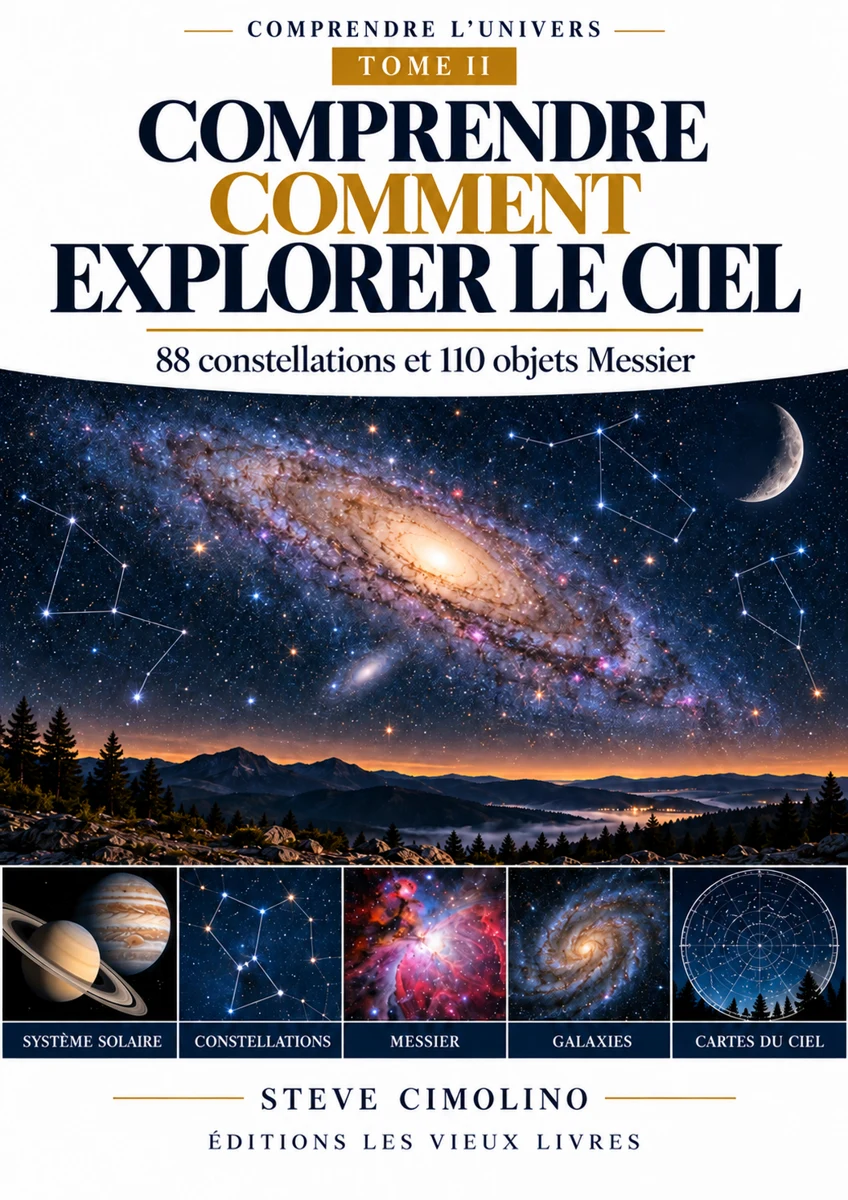
Volume II cover
Continue discovering

Comprendre comment explorer le ciel

Explore the collection and progress on volume II.

Discover the book →