

Welcome to Universum.luUniversum · The astronomy portal
The portal / Solar System
One Sun. Many worlds. A shared history.

Our cosmic
neighbourhood.

From the Sun to comet reservoirs: explore the eight planets, the five recognised dwarf planets, a selection of major moons and the families of small bodies.

31 themed fact sheetsSearch and filtersLinks to observing tools
The SunMercuryVenusEarthMarsJupiterSaturnUranusNeptune

Order from the Sun. Sizes, distances and alignment are schematic.

31 fact sheets available.

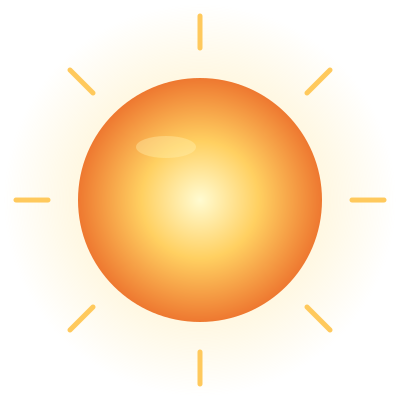
Schematic illustration: The Sun
Star

The Sun

A star of plasma whose gravity structures the Solar System. Its energy comes from nuclear fusion in its core.

Explore the fact sheet →
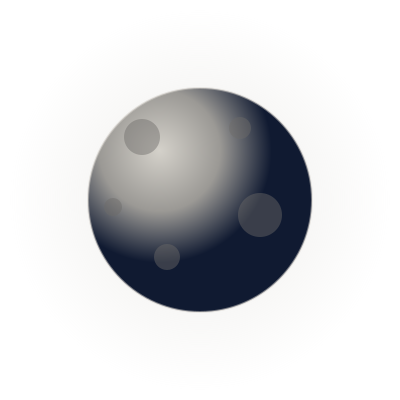
Schematic illustration: Mercury
Planet

Mercury

The smallest planet and the closest to the Sun. Its cratered surface preserves the traces of ancient impacts.

Explore the fact sheet →
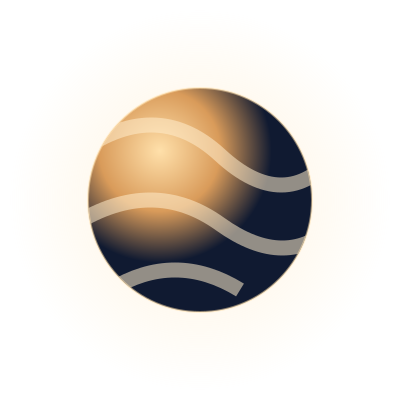
Schematic illustration: Venus
Planet

Venus

A rocky planet similar in size to Earth, wrapped in a very dense atmosphere.

Explore the fact sheet →
Schematic illustration: Earth
Planet

Earth

A rocky planet where oceans of liquid water, an atmosphere and life transform the surface.

Explore the fact sheet →
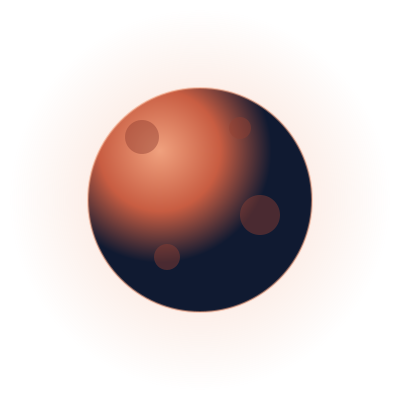
Schematic illustration: Mars
Planet

Mars

A cold desert world with a thin atmosphere, giant volcanoes and vast canyons.

Explore the fact sheet →
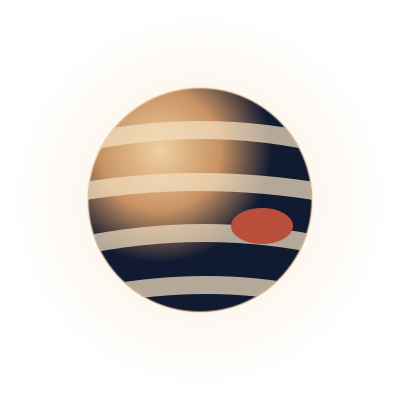
Schematic illustration: Jupiter
Planet

Jupiter

The largest planet, dominated by hydrogen and helium, with an atmosphere of bands and swirling storms.

Explore the fact sheet →
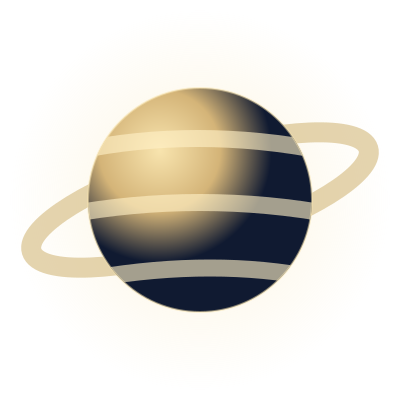
Schematic illustration: Saturn
Planet

Saturn

A giant composed mainly of hydrogen and helium, surrounded by a spectacular ring system.

Explore the fact sheet →
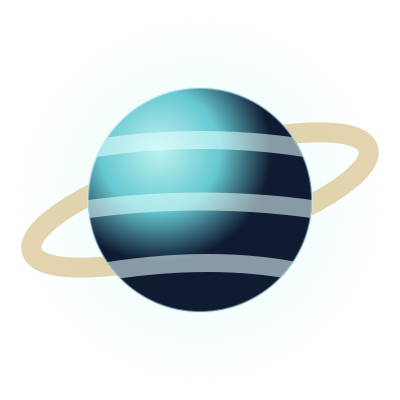
Schematic illustration: Uranus
Planet

Uranus

A blue-green ice giant with an extreme axial tilt.

Explore the fact sheet →
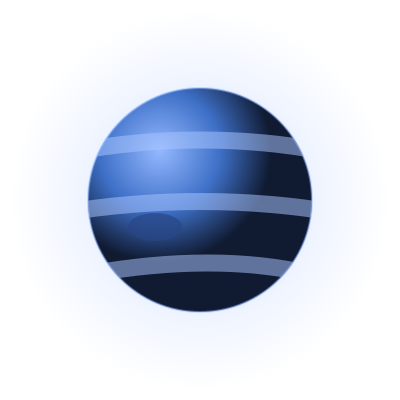
Schematic illustration: Neptune
Planet

Neptune

The most distant of the eight planets, an ice giant with an atmosphere stirred by fast winds.

Explore the fact sheet →
Dwarf planet

Ceres

The largest object in the asteroid belt, between Mars and Jupiter, is also a dwarf planet.

Explore the fact sheet →
Dwarf planet

Pluto

Pluto combines mountains of water ice, plains of volatile ices and a tenuous atmosphere.

Explore the fact sheet →
Dwarf planet

Haumea

An elongated trans-Neptunian object with a very rapid rotation.

Explore the fact sheet →
Dwarf planet

Makemake

A dwarf planet in the Kuiper Belt, much colder and more distant than the terrestrial planets.

Explore the fact sheet →
Dwarf planet

Eris

A distant world close to Pluto in size, accompanied by the moon Dysnomia.

Explore the fact sheet →
Moon

The Moon

Dark basaltic maria and cratered terrain tell the story of our satellite.

Explore the fact sheet →
Moon

Phobos

The larger of Mars’s two moons, with an irregular shape.

Explore the fact sheet →
Moon

Deimos

Mars’s smaller moon, an irregular body marked by impacts.

Explore the fact sheet →
Moon

Io

The Galilean moon famous for its intense volcanic activity.

Explore the fact sheet →
Moon

Europa

An icy moon whose surface is crossed by fractures.

Explore the fact sheet →
Moon

Ganymede

The largest moon in the Solar System, bigger than Mercury.

Explore the fact sheet →
Moon

Callisto

A large moon with an ancient, heavily cratered surface.

Explore the fact sheet →
Moon

Titan

Saturn’s largest moon is enveloped in a thick atmosphere.

Explore the fact sheet →
Moon

Enceladus

A small icy moon that ejects water vapour and ice particles.

Explore the fact sheet →
Moon

Triton

Neptune’s main moon follows a retrograde orbit.

Explore the fact sheet →
Moon

Charon

Pluto’s main moon is about half the diameter of its companion.

Explore the fact sheet →
Moons and regions

The moons of Uranus

Miranda, Ariel, Umbriel, Titania and Oberon form the group of Uranus’s five major moons.

Explore the fact sheet →
Small bodies

Asteroids and the main belt

Asteroids are small bodies, mostly rocky or metallic, that orbit the Sun.

Explore the fact sheet →
Small bodies

Comets

Small bodies rich in ices can develop a coma and tails as they approach the Sun.

Explore the fact sheet →
Small bodies

Meteoroids, meteors and meteorites

A fragment in space, a luminous streak in the atmosphere, and possibly a fragment on the ground.

Explore the fact sheet →
Moons and regions

The Kuiper Belt

A vast region beyond Neptune, populated by icy bodies including Pluto.

Explore the fact sheet →
Moons and regions

The Oort Cloud

An immense reservoir of icy bodies, proposed in particular to explain the origin of long-period comets.

Explore the fact sheet →

Compare the eight planets

PlanetEquatorial diameter (km)Mean distance from the Sun (million km)Orbital period
Mercury487957,988 days
Venus12104108,2224,7 days
Earth12756149,6365,2 days
Mars6792228,0687 days
Jupiter142984778,5≈ 11,9 ans
Saturn1205361432,0≈ 29,4 ans
Uranus511182867,0≈ 84 ans
Neptune495284515,0≈ 165 ans

Rounded values, Earth time. Source: NASA/NSSDCA. Periods may vary slightly between tables depending on conventions and rounding.

Planet or dwarf planet?

Both orbit the Sun and are massive enough to reach a shape close to equilibrium. A planet has also become gravitationally dominant in the neighbourhood of its orbit; a dwarf planet has not, and is not a satellite.

Understand the classification →

A catalogue for learning

All eight planets and the five recognised dwarf planets are presented. The moons and small bodies are an educational selection, rather than an inventory of every discovered object.