
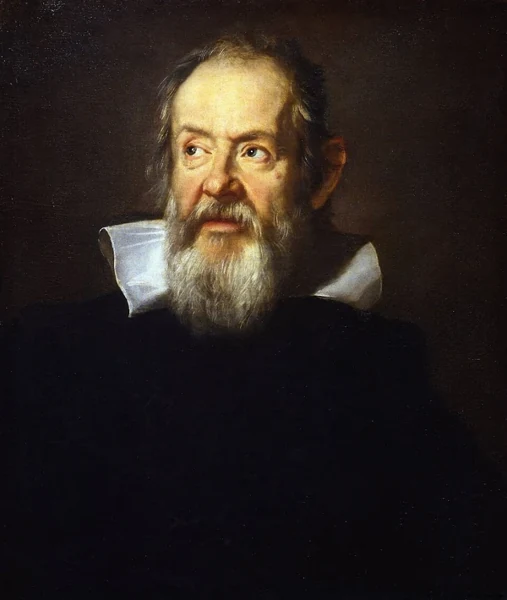

A life of research
Born in Pisa, Galileo Galilei taught mathematics and studied motion. He improved telescopes from 1609 onward, although he did not invent the instrument.
He publicised his observations in Sidereus nuncius in 1610. A defender of the Copernican system, he was condemned by the Inquisition in 1633 and spent his final years under house arrest.
Understanding the contribution
Jupiter’s moons showed that not every celestial body circles Earth. Venus’s full range of phases contradicted the classical Ptolemaic model, although it remained compatible with Tycho Brahe’s system.
The Moon revealed shadows and relief rather than a perfect surface. By linking experiments, measurements and mathematics, Galileo also helped establish the foundations of mechanics.