Welcome to Universum.luUniversum · The astronomy portal
The portal / The history of astronomy
A collective history · Millennia of curiosity

How did we learn
to read the sky?

Follow the observations, ideas and journeys that transformed our understanding of the Universe. A history of knowledge passed on, collaboration and questions that remain open.

60historical milestones
7eras

The earliest skies

Calendars, geometry and early models of the cosmos: different civilisations observe and interpret the same sky.

Around 1800 BCE
Observation

The Moon sets the rhythm in Mesopotamia

Long before telescopes, Mesopotamian scribes organised months around the returning lunar crescent. Additional months helped keep the calendar aligned with the seasons. Clay tablets gradually preserved observations and calculation methods. This approximate date marks a long tradition rather than a single invention; later Babylonian records would supply valuable information to Greek, Indian and other astronomical traditions. The records made systematic comparison possible.

Why it matters · Written records allow cycles to be compared and knowledge to outlive individual observers.

View sources
Around 1500 BCE
Observation

Egypt connects the sky with the seasons

In ancient Egypt, celestial cycles helped organise time, ceremonies and agriculture. Sirius, associated with Sopdet, had a special role: its return to the dawn sky was linked with the season of the Nile flood. Astronomical images on monuments preserve aspects of this knowledge. The date is approximate; these practices developed over many centuries rather than beginning in one identifiable year.

Why it matters · Astronomy serves practical human needs, connecting the passage of time with the seasonal rhythm of life.

View sources
Around 350 BCE
Idea and theory

Aristotle: a spherical Earth in an ordered cosmos

Aristotle argued for a spherical Earth using observations such as Earth’s shadow during lunar eclipses and changes in visible stars with latitude. Yet his model placed a stationary Earth at the centre and separated celestial from terrestrial physics. Some arguments were sound, while the wider framework would be overturned. A scientific tradition can contain both useful evidence and mistaken assumptions.

Why it matters · Earth’s shape becomes a question that can be argued from observable phenomena.

View sources
Around 280 BCE
Idea and theory

Aristarchus imagines a moving Earth

Aristarchus of Samos proposed that Earth travels around the Sun, an idea known mainly through other ancient writers, including Archimedes. His surviving treatise uses geometry to compare the sizes and distances of the Sun and Moon. Its numerical estimates were imperfect, and heliocentrism did not become established. Formulating an alternative model was an important step, but not the same as proving it.

Why it matters · A moving Earth could be imagined long before instruments could measure its subtle observational consequences.

View sources
Around 240 BCE
Observation

Eratosthenes measures Earth with shadows

Eratosthenes compared the Sun’s elevation at Alexandria and Syene, in present-day Egypt. Combining the angular difference with an estimated distance between the towns gave him Earth’s circumference. The exact length of his unit, the stadion, remains debated, so claims of modern precision need caution. The lasting achievement was a method that connected simple observations with the dimensions of an entire planet.

Why it matters · Local observations and geometry can reveal the scale of a whole world.

View sources
Around 129 BCE
Observation

Hipparchus compares stars across time

Hipparchus compiled a star catalogue and compared positions with older observations. He recognised precession, the slow shift of the equinoxes relative to the stars. Much of his work survives only through later writers, especially Ptolemy. His achievement shows why astronomical records matter: some changes become apparent only when observations separated by many years can be placed alongside one another. The comparison depended on earlier observers.

Why it matters · Historical measurements reveal motions too slow to be recognised during a single observing session.

View sources
Around 150
Idea and theory

The Almagest makes the sky calculable

Working in Alexandria, Ptolemy combined observations, geometry and calculation in the work later called the Almagest. His Earth-centred model used combinations of circular motions to predict planetary positions. It was a useful computational framework even though its physical picture would be replaced. Arabic and Latin translations made it a foundation that astronomers criticised, corrected and developed for more than a millennium.

Why it matters · A model can predict observations successfully while its underlying physical interpretation remains open to revision.

View sources
Around 400
Idea and theory

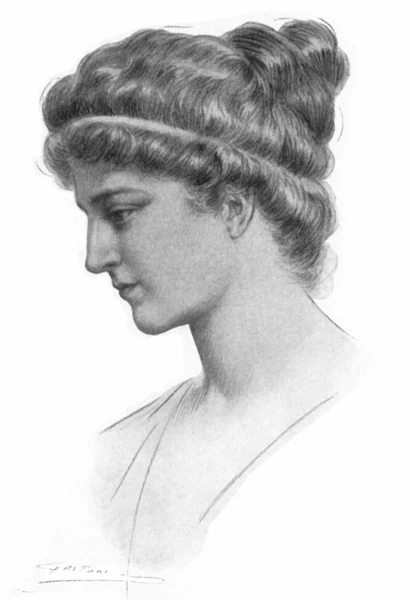
Hypatia teaches the mathematics of the sky

In Alexandria, Hypatia taught philosophy and mathematics within a scholarly tradition that included astronomy. Her work was connected with that of her father Theon, a commentator on Ptolemy. The surviving evidence is fragmentary and does not justify assigning her a particular astronomical discovery with confidence. Her place in this history highlights another essential activity: teaching, explaining and preserving the tools of knowledge.

Why it matters · Scientific knowledge also depends on the teachers and scholars who preserve methods and make them available to later generations.

View sources
499
Idea and theory

Aryabhata explains the sky through calculation

Aryabhata’s Aryabhatiya, composed in 499, presented mathematical and astronomical methods developed in India. He explained the sky’s apparent daily motion through Earth’s rotation and treated eclipses using shadows and geometry. This was not the complete modern Solar System model. Nevertheless, his calculations and tables shaped a tradition of commentary and further research that continued for centuries. Later scholars debated and refined these methods.

Why it matters · A rotating Earth offers a physical interpretation of the daily sky, while geometry explains eclipses.

View sources

Knowledge in circulation

Translations, tables and observatories expand knowledge, from Baghdad to China and Maya cities.

Around 820
Instrument

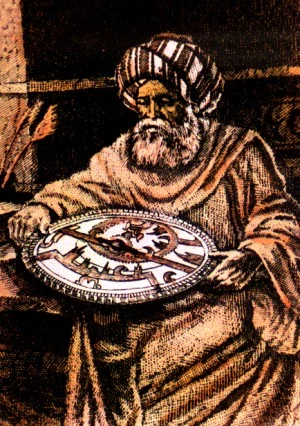
Al-Khwarizmi and Baghdad’s astronomical tables

In Baghdad, al-Khwarizmi worked within a scholarly culture that translated, compared and developed Indian, Persian and Greek traditions. His astronomical tables, compiled around 820, supplied tools for calculating celestial positions and organising time. Later versions and adaptations travelled widely. This activity involved more than preserving earlier texts: translation, computation and revision generated new ways of doing astronomy. Tables linked mathematical methods with practical observation.

Why it matters · Knowledge crossing languages and regions creates new methods rather than simply carrying old ideas unchanged.

View sources
Around 900
Observation

Al-Battani refines solar and lunar motions

Between the late ninth and early tenth centuries, al-Battani made careful observations, particularly at Raqqa. Comparing inherited tables with measurements, he refined parameters describing the solar year and the motions of the Sun and Moon. Later Latin translations brought his work to European astronomers. His contribution illustrates how astronomy advances through patient corrections as well as through striking new theories.

Why it matters · Repeated measurements test inherited tables and steadily improve the reliability of astronomical predictions.

View sources
964
Observation

Al-Sufi checks the stars against catalogues

In his Book of Fixed Stars, composed around 964, Abd al-Rahman al-Sufi connected Ptolemy’s legacy, Arabic traditions and his own observations. He described constellations, positions and stellar brightnesses. The work includes a faint patch in Andromeda, now recognised as a galaxy. Its extragalactic nature was unknown to him: recording an object and understanding its physical nature are different stages of discovery.

Why it matters · Catalogues preserve observations of objects whose true nature may remain unexplained for centuries.

View sources
1054
Observation

Chinese astronomers record a “guest star”

In 1054, Chinese observers described a bright new object in the sky; Japanese accounts also survive. We now associate the event with the stellar explosion that produced the Crab Nebula. The chroniclers lacked modern supernova physics, yet their dated descriptions became valuable scientific evidence. Historical observations and modern telescopes can therefore investigate different stages in the life of the same celestial object.

Why it matters · Records almost a millennium old help establish the age and development of a supernova remnant.

View sources
Around 1200
Observation

Maya scribes track the cycle of Venus

The Dresden Codex preserves Maya tables concerning Venus and eclipses within a tradition connecting the sky, calendars and ritual. The surviving manuscript is generally assigned to the Postclassic period, long after Maya astronomy began. Its calculations organise recurring cycles and reflect sustained attention to long-term patterns. This approximate date refers to a surviving document, not the origin of Maya astronomical knowledge.

Why it matters · An independent astronomical tradition develops tools connecting celestial cycles with calendars and collective life.

View sources
Around 1260
Idea and theory

At Maragha, al-Tusi develops new mathematical tools

Nasir al-Din al-Tusi played a major role at the thirteenth-century Maragha observatory in present-day Iran. Scholars there developed observations, tables and mathematical models. The Tusi couple combines circular motions to produce straight-line motion. Such constructions challenged parts of Ptolemy’s machinery while retaining an Earth-centred framework. Similarities with later models are significant, but do not by themselves document every step of transmission.

Why it matters · Criticism of older models creates new geometrical solutions before the adoption of a Sun-centred system.

View sources
Around 1350
Idea and theory

Ibn al-Shatir revises planetary models

In Damascus, astronomer and timekeeper Ibn al-Shatir built instruments and reformulated models of the Sun, Moon and planets. His lunar model reduced the unrealistic distance changes implied by Ptolemy’s version while retaining a central Earth. Some of his mathematical devices resemble those later used by Copernicus. The precise routes of any transmission remain a subject for historical research rather than a settled chain of borrowing.

Why it matters · Improving a model’s internal consistency and observational fit can prepare the way for deeper changes.

View sources

A new place for Earth

Instrumental observation and physics transform models of the Solar System.

1543
Idea and theory

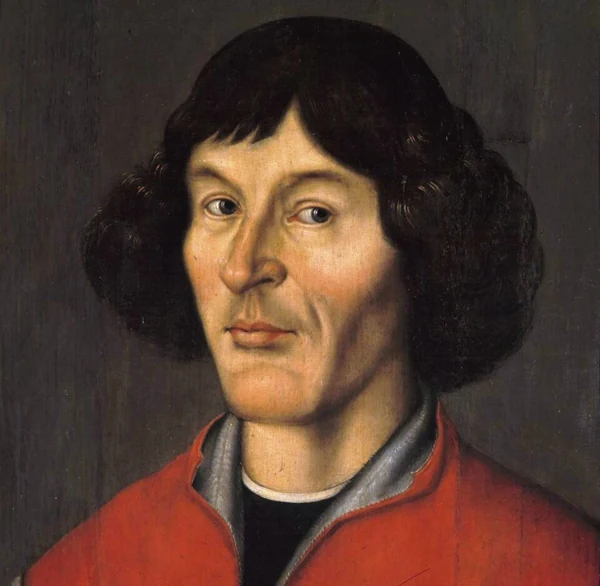
Copernicus publishes a Sun-centred system

In De revolutionibus, Nicolaus Copernicus described an Earth that rotates and travels around the Sun. Planetary ordering and apparent backward motions gained a new coherence. His system still relied on circles, however, and did not immediately improve every prediction. The publication began a long debate in which observations, mathematics and physics gradually changed Earth’s place in the cosmos. Agreement with observations remained essential.

Why it matters · Earth’s motion becomes the basis of a complete astronomical system that can be examined, tested and improved.

View sources
1572
Observation

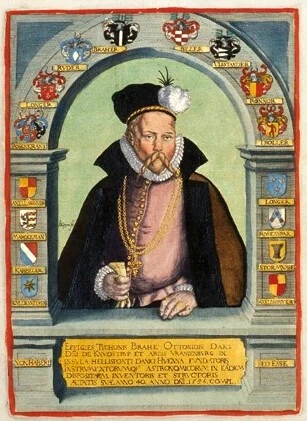
Tycho Brahe observes a changing sky

A bright new star appeared in Cassiopeia in 1572. Tycho Brahe studied it carefully and found no measurable displacement suggesting a nearby terrestrial phenomenon. Now recognised as a supernova, the event challenged the idea of unchanging heavens. His later planetary observations, made before the telescope, reached remarkable precision and supplied Kepler with the measurements needed to reconsider the shapes of planetary orbits.

Why it matters · Precise observations challenge an unchanging cosmos and provide the evidence from which new celestial models can grow.

View sources
1609–1619
Idea and theory

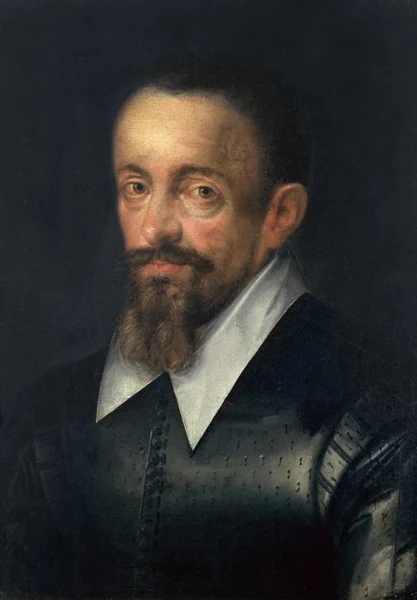
Kepler replaces circles with ellipses

Analysing Tycho Brahe’s measurements of Mars, Johannes Kepler found that planets follow ellipses with the Sun at one focus. In 1609 he published two laws describing orbital shape and changes in speed. A third law, published in 1619, linked orbital period with orbit size. These mathematical relationships accurately described motion before Newton supplied a physical account of why they worked.

Why it matters · Planetary motion follows measurable mathematical relationships rather than an assumed requirement for perfect circles.

View sources
1610
Instrument

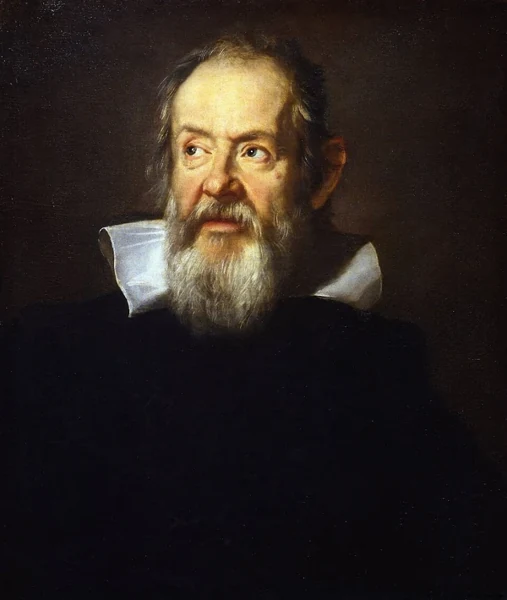
Galileo’s telescope reveals a different sky

Galileo improved the telescope and turned it towards celestial objects. He saw lunar terrain, stars invisible to the unaided eye and four moons orbiting Jupiter. Those moons showed that not every celestial motion was centred on Earth. Venus’s phases further challenged Ptolemy’s model. These observations did not by themselves prove every part of heliocentrism, but they radically changed what an acceptable model had to explain.

Why it matters · New instruments uncover phenomena that force theories to account for a much richer observable sky.

View sources
1687
Idea and theory

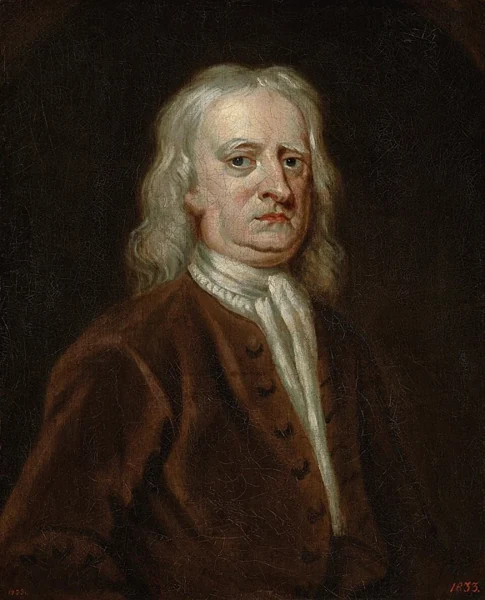
Newton connects falling objects with planetary orbits

In the Principia, Isaac Newton formulated laws of motion and universal gravitation. The same interaction accounts for falling objects on Earth and the motion of the Moon and planets. Kepler’s laws gain a common physical explanation, with refinements arising from interactions among several bodies. This unification enables new predictions while leaving questions that general relativity would eventually address. Its predictions could be checked quantitatively.

Why it matters · Terrestrial and celestial motion become parts of one physical framework with powerful predictive tools.

View sources
1705
Idea and theory

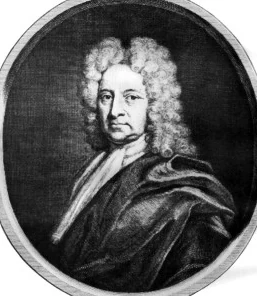
Halley predicts a comet’s return

Edmond Halley compared comet appearances in 1531, 1607 and 1682. Applying Newton’s gravitation, he argued that they were one object on a recurring orbit and predicted a return in 1758. It returned after his death, with later calculations refined by Clairaut, Lalande and Nicole-Reine Lepaute. A seemingly unpredictable visitor became an object whose path could be investigated and forecast. Observation could now test the forecast.

Why it matters · A successful prediction tests a physical theory beyond the observations originally used to develop it.

View sources

Reading light, measuring stars

Distances, spectra and photographs create an astronomy concerned with the physical nature of celestial objects.

1781
Observation

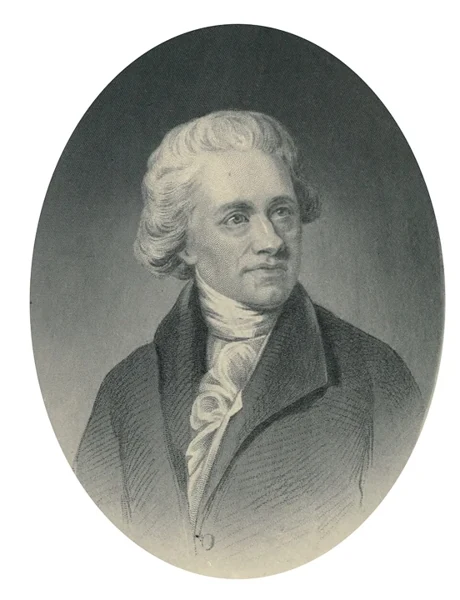
William Herschel enlarges the Solar System

Using a telescope he had built, William Herschel spotted an unfamiliar object in 1781 and initially thought it was a comet. Its motion established that it was a planet: Uranus. The known Solar System extended beyond Saturn. Together with Caroline Herschel, he then undertook extensive sky surveys, using instruments and catalogues to investigate a growing variety of faint and distant celestial objects.

Why it matters · An unexpected observation can enlarge the map of the Solar System and inspire systematic exploration.

View sources
1786
Observation

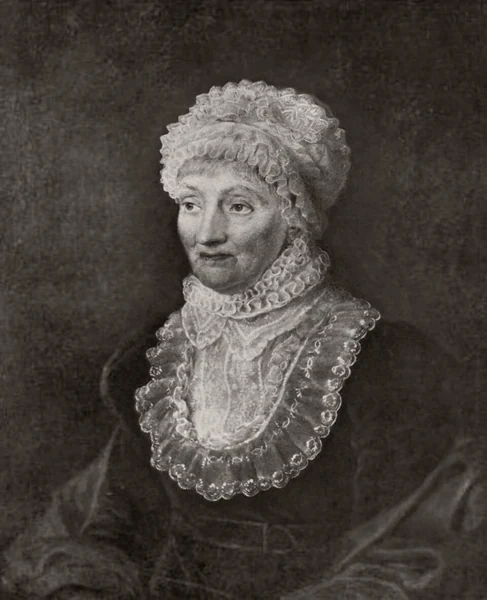
Caroline Herschel pursues her own comet searches

Caroline Herschel discovered her first comet in 1786 and several more over the following decade. Her work went beyond assisting William: she observed, calculated, organised and corrected catalogues. A royal salary later recognised her contribution. Her career makes visible the many activities astronomy requires, including careful data organisation that receives less attention than discovering a new object but is equally important to reliable knowledge.

Why it matters · Observation, calculation and accurate cataloguing are scientific achievements in their own right.

View sources
1814
Instrument

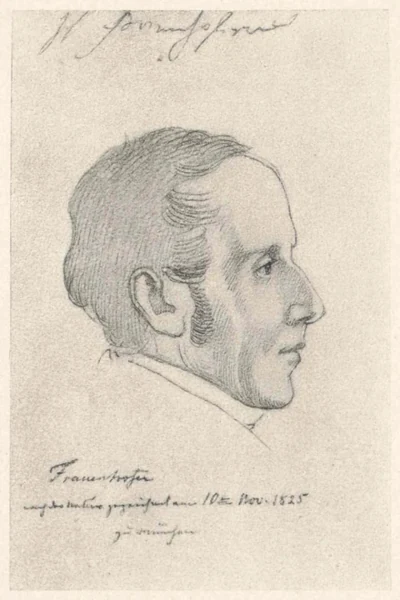
Fraunhofer maps dark lines in sunlight

Joseph von Fraunhofer measured hundreds of dark lines in the solar spectrum and used them as reference markers to improve optical instruments. Their physical origin was not yet understood. Later work by Kirchhoff and Bunsen connected these signatures with chemical elements absorbing light. Light was becoming more than a means of seeing celestial objects: it could be separated into information about their physical nature.

Why it matters · Spectral signatures will reveal the composition and physical conditions of objects that cannot be sampled directly.

View sources
1838
Observation

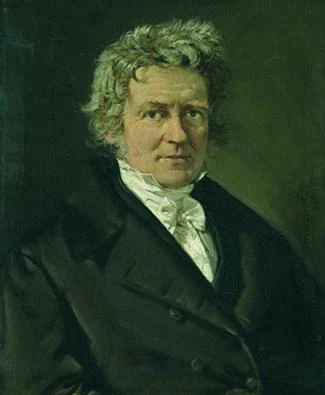
Bessel measures the distance to a star

In 1838, Friedrich Bessel published a convincing parallax measurement for 61 Cygni: a tiny apparent shift caused by Earth’s yearly motion. Triangulation converts this shift into a distance. Contemporary work by Friedrich Struve and Thomas Henderson also contributed to the breakthrough. Stars could now be placed at measured depths in space rather than treated simply as points projected onto a celestial sphere.

Why it matters · Parallax supplies a geometrical foundation for the ladder of distances to stars and more remote objects.

View sources
1846
Observation

Neptune: a planet sought through calculation

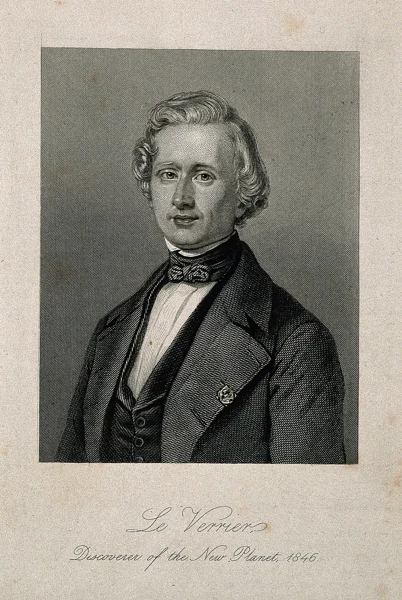
Discrepancies in Uranus’s orbit led Urbain Le Verrier to calculate the position of a disturbing planet. In September 1846, Johann Galle and Heinrich d’Arrest found Neptune near his predicted location in Berlin. John Couch Adams had independently performed related calculations in Britain. The discovery combined theory, computation and observation; it did not establish that every future orbital anomaly must have the same explanation.

Why it matters · A measured discrepancy can guide a targeted search when a prediction is checked against the real sky.

View sources
1864
Observation

Huggins distinguishes glowing gas from stars

William Huggins applied spectroscopy to stars and nebulae. In 1864, he found that some nebulae displayed emission lines characteristic of glowing gas rather than the spectrum expected from many stars. Work with William Allen Miller, and later Margaret Huggins, helped establish astrophysics. A fuzzy telescopic appearance was no longer enough to classify an object: its spectrum could reveal what kind of material produced its light.

Why it matters · Splitting light into a spectrum distinguishes objects that can look deceptively similar in ordinary images.

View sources
1890–1924
Instrument

At Harvard, spectra become a shared language

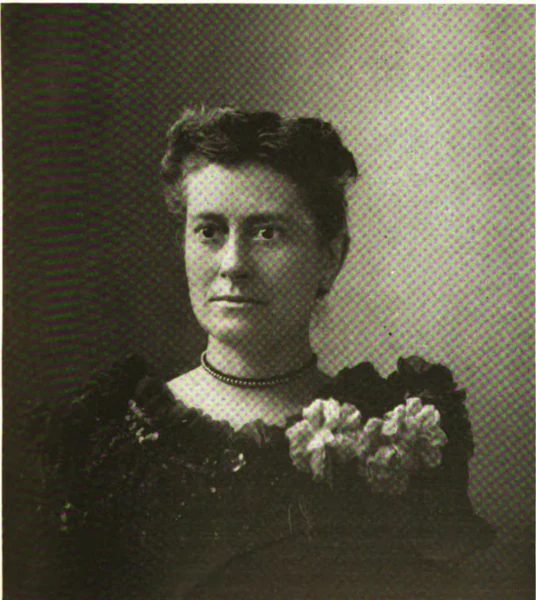
Photographic plates made it possible to compare thousands of stellar spectra. At Harvard Observatory, Williamina Fleming, Antonia Maury, Annie Jump Cannon and their colleagues developed and refined classification systems. Cannon established the familiar O, B, A, F, G, K, M sequence, while the Henry Draper Catalogue appeared in multiple volumes. This collective work enabled systematic comparisons of stars and prepared the way for a physical interpretation.

Why it matters · Consistent classification reveals patterns across stellar populations that cannot be recognised from a single star.

View sources
1912
Observation

Leavitt discovers a rule for measuring the Universe

Henrietta Swan Leavitt studied variable stars in the Small Magellanic Cloud. She established that brighter Cepheids have longer variation periods, refining the relationship in 1912. Because these stars are approximately equally distant, their comparison revealed an intrinsic property. Once calibrated, the relationship turned a star’s measured period into a luminosity estimate and then a distance, reaching far beyond the range of early stellar parallax measurements.

Why it matters · The rhythm of a variable star becomes a luminosity indicator and a powerful measure of cosmic distance.

View sources

A vast, dynamic Universe

Relativity, galaxies and expansion change our understanding of space, time and matter.

1915
Idea and theory

Einstein turns gravitation into geometry

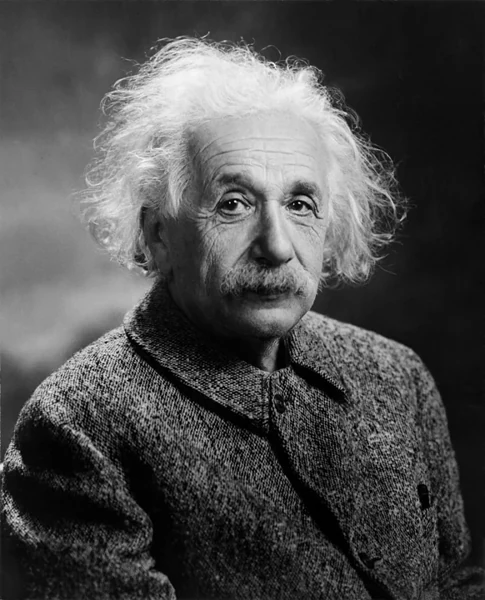
Albert Einstein presented the equations of general relativity in 1915. Gravitation is described through the curvature of spacetime associated with matter and energy. The theory explained an anomaly in Mercury’s orbit and predicted the deflection of light. It did not replace observation: its consequences required measurement. It would provide a common framework for black holes, cosmic expansion and gravitational waves.

Why it matters · Space and time become dynamic parts of physics, affected by matter and energy.

View sources
1916
Idea and theory

Schwarzschild opens a route towards black holes

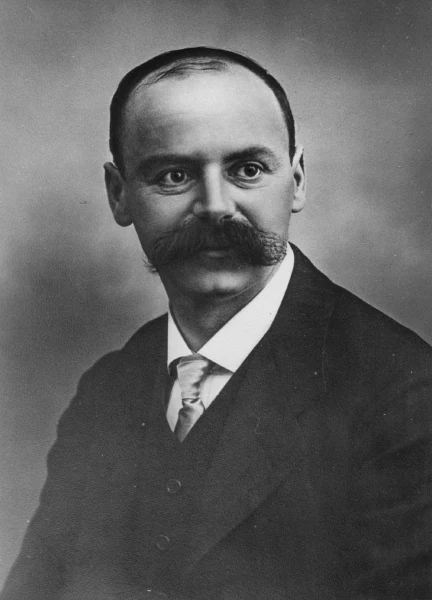
Soon after general relativity appeared, Karl Schwarzschild found an exact solution describing spacetime outside a spherical, nonrotating mass. It contained a characteristic radius that would become central to black hole physics. Understanding its physical meaning took decades of further work. This was a theoretical result, not an observed black hole or immediate proof that such objects existed in the real Universe.

Why it matters · A mathematical solution reveals physical possibilities whose meaning later generations will clarify and test.

View sources
1919
Observation

An eclipse tests general relativity

During the solar eclipse of 29 May 1919, expeditions to Sobral and Príncipe photographed stars near the Sun. Teams associated with Arthur Eddington, Frank Dyson and Andrew Crommelin looked for the apparent displacement predicted by general relativity. Their announced results supported Einstein’s prediction within the limitations of the instruments. Later, much more precise observations strengthened this famous comparison between theoretical expectations and measured celestial positions.

Why it matters · A prediction about light is tested astronomically, then checked again using increasingly precise instruments.

View sources
1923–1924
Observation

Andromeda becomes a galaxy beyond our own

Beginning in 1923, Edwin Hubble identified Cepheids in Andromeda and used Henrietta Leavitt’s relationship to estimate its distance. Results made public in 1924 placed it far outside the Milky Way, despite an imperfect distance calibration. Spiral nebulae could be vast, separate stellar systems. Our Galaxy no longer represented the entire stellar Universe, and astronomy acquired a new, much larger scale for investigation.

Why it matters · The observable Universe expands dramatically: the Milky Way becomes one galaxy among many.

View sources
1925
Idea and theory

Cecilia Payne reveals what stars are made of

In her 1925 thesis, Cecilia Payne linked stellar spectra with temperature and the physics of ionisation. She concluded that hydrogen and helium dominate stellar composition, challenging expectations at the time. Differences between spectra therefore did not simply indicate radically different chemical ingredients. Building on Harvard’s classifications and observations, her work opened the way to a quantitative physical understanding of stellar atmospheres.

Why it matters · Starlight can reveal physical properties such as temperature and composition when interpreted with the right theory.

View sources
1927
Idea and theory

Lemaître connects relativity with cosmic expansion

In 1927, Georges Lemaître proposed an expanding Universe and connected galaxy distances with their apparent recession speeds, combining general relativity with available observations. Alexander Friedmann had already found dynamic cosmological solutions. Expansion means that large-scale distances between unbound galaxies grow; it is not an explosion spreading from a central point through pre-existing space. This interpretation gave cosmology a physical account of a changing Universe.

Why it matters · Gravitational equations and galaxy measurements begin to tell a shared story about the history of the Universe.

View sources
1927
Observation

Oort reveals the Milky Way’s rotation

In 1927, Jan Oort used the velocities of nearby stars to provide observational evidence for differential rotation in the Milky Way, building on Bertil Lindblad’s theoretical work. Stars do not all move like points on a rigid spinning disc. The Sun became one member of a vast moving system, and stellar velocities became tools for reconstructing our Galaxy’s structure and gravitational field.

Why it matters · Stellar motions reveal a galactic architecture that positions on the sky alone cannot fully explain.

View sources
1929
Observation

Galaxies trace a distance–velocity relationship

In 1929, Edwin Hubble published a relationship between galaxy distances and radial velocities. It drew on measurements by several astronomers, notably Vesto Slipher’s spectra, and work with Milton Humason. The distance scale would later be substantially revised, but the trend became major evidence for expansion. Observation and theoretical interpretation, particularly Lemaître’s, were distinct contributions to a collective development rather than the achievement of one person alone.

Why it matters · A measurable pattern among galaxies becomes a test for models of an evolving Universe.

View sources
1930–1931
Idea and theory

Chandrasekhar finds a limit for white dwarfs

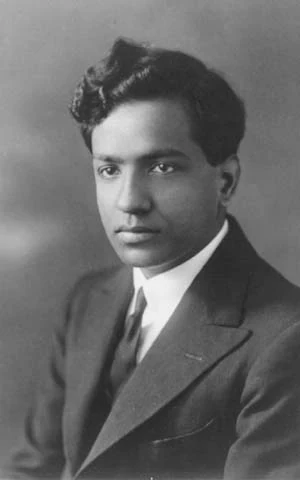
Subrahmanyan Chandrasekhar combined quantum mechanics and relativity to study white dwarfs. Work begun in 1930 and published from 1931 showed that electron pressure cannot support such a star above a limiting mass, roughly 1.4 times the Sun’s mass under typical assumptions. Stellar fate therefore depends on mass. The result became a crucial part of understanding stellar collapse and the different kinds of compact remnants.

Why it matters · Physics sets limits on stellar stability and explains why different stars can reach very different end states.

View sources
1933
Observation

Jansky detects the Milky Way in radio waves

Investigating interference in telecommunications, Karl Jansky found a radio signal that repeated with the stars rather than the Sun. He associated it with the Milky Way and published his results in 1933. The sky carried information beyond visible light. Instruments developed afterwards turned radio astronomy into a way to study interstellar gas, pulsars, active galaxies and other phenomena difficult to recognise with optical telescopes alone.

Why it matters · An unwanted source of interference becomes a new astronomical window beyond visible light.

View sources
1933
Observation

Zwicky identifies missing mass in a galaxy cluster

Fritz Zwicky compared the motions of galaxies in the Coma cluster with the mass inferred from their light. He found a substantial discrepancy and used the term dark matter. His initial estimates had uncertainties, but the question endured: could luminous material explain the observed motions? Later evidence on several scales turned this into a major cosmological problem without yet identifying the physical nature of the unseen matter.

Why it matters · Gravitational motion can indicate mass that does not reveal itself directly through emitted light.

View sources

The space age and new perspectives

Rockets leave Earth while radio astronomy and physics reveal phenomena invisible to the eye.

1957
Idea and theory

B²FH explains how stars produce elements

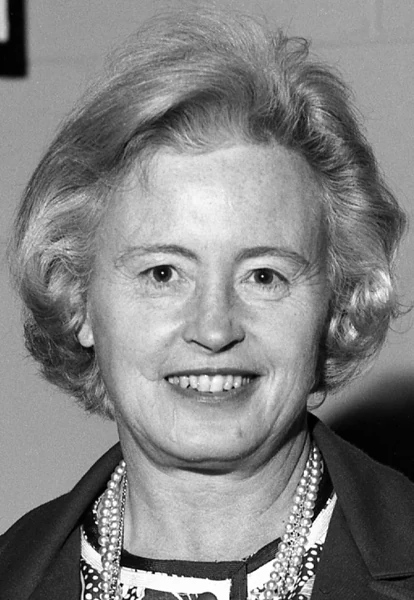
Margaret and Geoffrey Burbidge, William Fowler and Fred Hoyle published a landmark synthesis of stellar nucleosynthesis, commonly called B²FH. It linked nuclear reactions to elemental abundances and explained how stars and stellar explosions enrich the cosmos. Not every element shares the same origin: much of the hydrogen and helium comes from the early Universe. The history of matter thus became closely connected with the lives of successive stellar generations.

Why it matters · Nuclear physics connects the chemical material around us with the evolution of stars across cosmic history.

View sources
4 October 1957
Exploration

Sputnik begins the age of satellites

On 4 October 1957, the Soviet Union placed Sputnik 1 into Earth orbit. Radio signals from the small sphere symbolised a major change: humanity could now put an object around its planet. The achievement belonged to a large engineering effort within Cold War rivalry. Satellites would enable new ways to observe Earth and space and to operate instruments above many of the atmosphere’s observational limitations.

Why it matters · Space becomes a place where instruments can be installed, rather than only a direction in which to look.

View sources
12 April 1961
Exploration

Yuri Gagarin makes the first human spaceflight

On 12 April 1961, Yuri Gagarin launched aboard Vostok 1 and became the first human to travel into space and orbit Earth. The flight lasted 108 minutes. It built on Soviet teams’ work on launch vehicles, spacecraft and survival systems. A technological possibility became a human experience, while raising new questions about how people could live and work for longer periods beyond Earth’s atmosphere.

Why it matters · Human spaceflight becomes a reality, establishing a foundation for exploration beyond Earth’s atmosphere.

View sources
1965
Observation

Relic radiation reveals a hot early Universe

Arno Penzias and Robert Wilson identified a persistent microwave signal, published in 1965. Interpreted with Robert Dicke, James Peebles and colleagues, it became major evidence for a formerly hot, dense Universe: the cosmic microwave background. It is not a photograph of the initial instant, but light released much later when the Universe became transparent. Dedicated missions would subsequently map its tiny variations across the sky.

Why it matters · An independent observation provides powerful evidence that the early Universe passed through a hot and dense phase.

View sources
1967
Observation

Jocelyn Bell Burnell identifies pulsars

Examining radio telescope records in Cambridge, Jocelyn Bell Burnell identified unusually regular signals. The team led by Antony Hewish checked that they were not terrestrial interference. These sources were subsequently understood as rotating neutron stars whose beams sweep across our line of sight. Pulsars transformed theoretical stellar remnants into observable objects and demonstrated how careful attention to unexpected details in data can open a new field of astronomy.

Why it matters · Regular radio pulses reveal compact stellar remnants and provide exceptionally precise natural clocks.

View sources
July 1969
Exploration

Apollo 11: humans walk on the Moon

In July 1969, a Saturn V launched Neil Armstrong, Buzz Aldrin and Michael Collins towards the Moon. Armstrong and Aldrin landed in Eagle and explored the surface while Collins remained in lunar orbit aboard Columbia. They collected samples and installed experiments. The mission combined a human achievement with scientific investigation of another world, supported by the work of extensive engineering and operations teams on Earth.

Why it matters · Remote observations are complemented by experiments on another world and samples analysed in laboratories on Earth.

View sources
1970s
Observation

Galaxy rotation deepens the dark matter puzzle

Vera Rubin, Kent Ford and collaborators measured the rotation of spiral galaxies. Their 1970 work and subsequent studies, alongside other optical and radio observations, showed that outer regions often rotate faster than expected from luminous matter alone. This strengthened the case for extended dark matter halos. It did not directly identify a particle and formed part of a collective history that had begun decades earlier.

Why it matters · Different observations reveal a mismatch between visible matter and measured gravity while leaving the microscopic explanation unresolved.

View sources
1974
Idea and theory

Hawking connects black holes with quantum physics

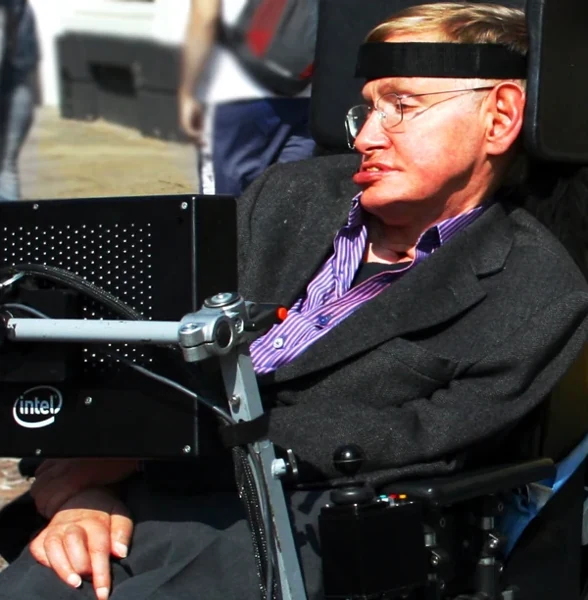
Stephen Hawking showed theoretically that quantum effects in curved spacetime lead to radiation associated with black holes. Published in 1974, the result connected gravitation, thermodynamics and quantum theory, alongside Jacob Bekenstein’s work. It raised fundamental questions about information and black hole evaporation. Radiation from an astrophysical black hole has not been directly observed, so this milestone records a theoretical prediction rather than a detection.

Why it matters · Black holes become a meeting point for gravity and quantum physics, exposing questions that remain unresolved.

View sources
1977
Exploration

Voyager sets out for the giant planets

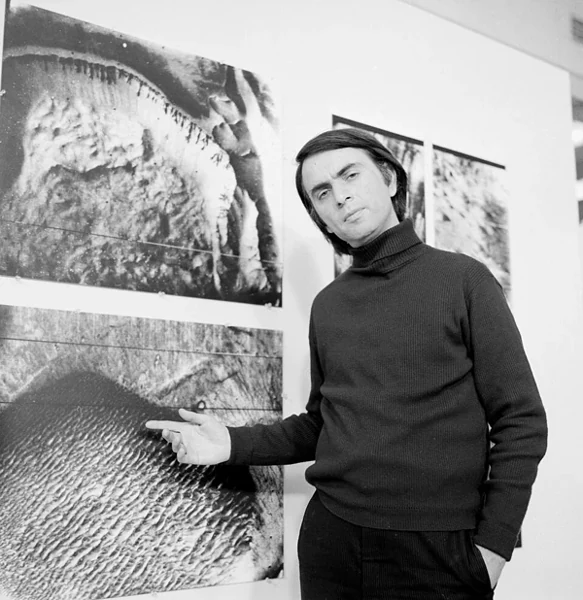
The two Voyager probes launched in 1977, using gravitational assists to explore the outer planets. Their instruments transformed understanding of atmospheres, rings and moons; Voyager 2 would also visit Uranus and Neptune. Each carried a record of terrestrial images and sounds prepared by a team chaired by Carl Sagan. The missions combined robotic exploration, scientific discovery and reflection on our planet’s place in the cosmos.

Why it matters · Close encounters reveal complex planetary worlds in details that observations from Earth could not provide.

View sources
24 April 1990
Instrument

Hubble places a major observatory above the atmosphere

The Hubble Space Telescope, a NASA and ESA project, launched aboard Discovery on 24 April 1990. A mirror flaw initially limited its images; a servicing mission supplied corrective optics in 1993. Its observations subsequently contributed to studies of galaxies, stars, planets and cosmic expansion. The mission also shows that an observatory depends on engineering, maintenance and collective interpretation as well as the act of looking at the sky.

Why it matters · A space observatory combines sharp images, spectral access and repeated measurements to investigate celestial objects and their evolution.

View sources

Other worlds, other messengers

Exoplanets, gravitational waves and major observatories open new windows on the Universe.

1992
Observation

The first confirmed exoplanets orbit a pulsar

In 1992, Aleksander Wolszczan and Dale Frail announced planets around the pulsar PSR B1257+12. Their presence was inferred from tiny variations in the arrival times of radio pulses. These worlds orbit an extremely dense stellar remnant rather than a Sun-like star. The discovery confirmed planets beyond the Solar System and immediately showed that planetary systems could inhabit environments very different from our own.

Why it matters · Precise timing of a cosmic clock reveals planets that are far too faint to image directly.

View sources
1995
Observation

51 Pegasi b: a planet around a Sun-like star

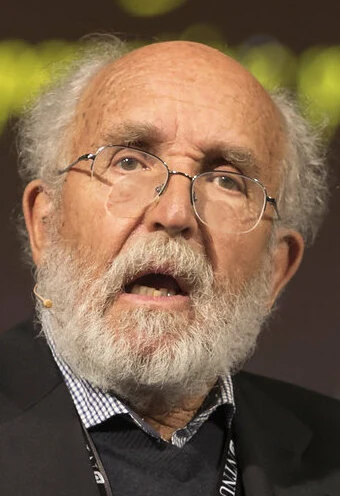
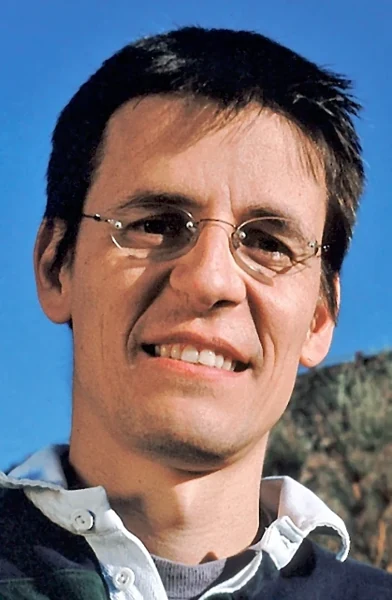
Michel Mayor and Didier Queloz announced 51 Pegasi b in 1995. Changes in its star’s spectral lines revealed the star’s motion under the planet’s gravitational pull. The gas giant completes an orbit close to its star in just a few days. As the first exoplanet detected around a Sun-like star, it challenged expectations based on our Solar System and reshaped models of planetary formation and migration.

Why it matters · Other planetary systems need not resemble ours; an unexpected discovery changes the questions that models must answer.

View sources
1998
Observation

Supernovae reveal an accelerating expansion

Two teams, the Supernova Cosmology Project and the High-Z Supernova Search Team, compared distant supernova distances with their redshifts. Results presented in 1998 indicated that cosmic expansion was accelerating rather than simply slowing under gravity. Saul Perlmutter, Brian Schmidt, Adam Riess and many collaborators contributed. Dark energy is the name given to the component used to describe this acceleration, whose physical nature remains unresolved.

Why it matters · The measured history of expansion poses a new problem: understanding the cause of the observed cosmic acceleration.

View sources
2002
Observation

Stellar orbits weigh the Milky Way’s central object

Since the 1990s, teams led by Reinhard Genzel and Andrea Ghez have tracked stars near Sagittarius A* at the Galactic Centre. S2’s close approach in 2002 marked a major step in reconstructing their orbits. The motions require an enormous mass within a very small volume, providing strong evidence for a supermassive black hole. The invisible object is revealed through its gravitational influence on neighbouring stars.

Why it matters · Stellar orbits act as scales, testing the mass and compactness of the object at our Galaxy’s centre.

View sources
19 December 2013
Instrument

Gaia builds a moving map of the Milky Way

Launched by ESA on 19 December 2013, Gaia measured stellar positions and motions with exceptional precision. Parallax gives distances, while motions and other measurements describe the dynamics and properties of stellar populations. Its catalogues allow astronomers to reconstruct parts of the Milky Way’s history, including interactions with other galaxies. The mission transforms a view of the sky into an enormous collection of consistently measured, comparable objects.

Why it matters · A three-dimensional, dynamic map connects individual stars with the structure and history of our Galaxy.

View sources
2015 · announced in 2016
Observation

LIGO directly detects gravitational waves

On 14 September 2015, both LIGO detectors recorded GW150914, a signal from two merging black holes. The announcement followed on 11 February 2016 after checks by the LIGO and Virgo collaborations. Tiny changes in distance made a travelling disturbance in spacetime measurable. This collective achievement, supported by work from Rainer Weiss, Kip Thorne and many teams, opened an astronomical channel complementary to light.

Why it matters · Spacetime disturbances reveal cosmic events that may be difficult or impossible to investigate through light alone.

View sources
2019 · Sagittarius A* follows in 2022
Observation

The Event Horizon Telescope reveals a black hole’s shadow

In April 2019, the Event Horizon Telescope collaboration released an image of the surroundings of M87’s supermassive black hole, combining radio telescopes across continents. The bright ring and central dark region reveal hot gas and extreme gravity; they are not a photograph of a solid surface. In 2022 the collaboration also released an image of Sagittarius A*, connecting theory with observations at our own Galaxy’s centre.

Why it matters · A worldwide telescope network reaches the resolution needed to investigate regions close to a black hole’s horizon.

View sources
July 2022
Instrument

Webb releases its first scientific observations

In July 2022, the James Webb Space Telescope released its first major scientific images and data. A NASA, ESA and Canadian Space Agency project, Webb observes primarily in infrared light. Its instruments investigate distant galaxies, star-forming regions and exoplanet atmospheres. These measurements complement Hubble and other observatories: different wavelengths are needed to connect the appearance of celestial objects with the physical processes and histories that shaped them.

Why it matters · Infrared observations investigate dust-obscured regions and the strongly redshifted light of distant galaxies.

View sources
April 2026
Exploration

Artemis II takes a crew around the Moon again

In April 2026, Reid Wiseman, Victor Glover, Christina Koch and Jeremy Hansen travelled around the Moon aboard Orion, launched by SLS. Artemis II completed a crewed flight of nearly ten days, including a lunar flyby and return to Earth, without landing on the Moon. The mission tested spacecraft systems and operations for deep-space travel, adding a completed flight to the history of human lunar exploration.

Why it matters · A crew tests the systems and procedures needed to travel beyond Earth orbit and return safely to Earth.

View sources

Timeline grouped by era: spacing is not proportional to elapsed time. Ancient dates may be approximate. Selected milestones, not an exhaustive list of people or discoveries.