

A life of research
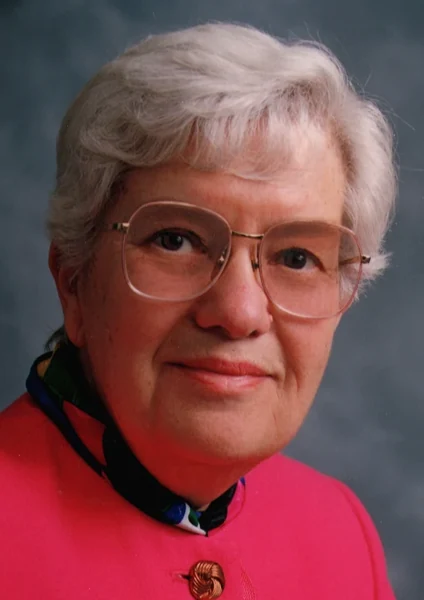
Born in Philadelphia, she studied at Vassar, Cornell and Georgetown. She conducted research at the Carnegie Institution, where she worked closely with Kent Ford, an expert in astronomical instrumentation.
She also advocated women's access to observatories and scientific careers. Her experience illustrates how the rules governing access to instruments can determine who has the opportunity to make discoveries.
Understanding the contribution
Rubin and Ford measured rotation speeds using shifts in spectral lines. Their work on Andromeda and then many other spiral galaxies showed that speeds did not decline as expected in the outer regions.
If ordinary gravitational theory describes these motions, additional mass must extend beyond the brightest visible parts. Their results became a major part of the evidence for dark matter, alongside other independent observations.