H-IIA is a Japanese rocket for satellites and robotic probes. Its first flight in 2001 continues the H-II programme while seeking more efficient launch operations.
JapanCountry or programme
2001First flight / test
No crewed flightHuman spaceflight
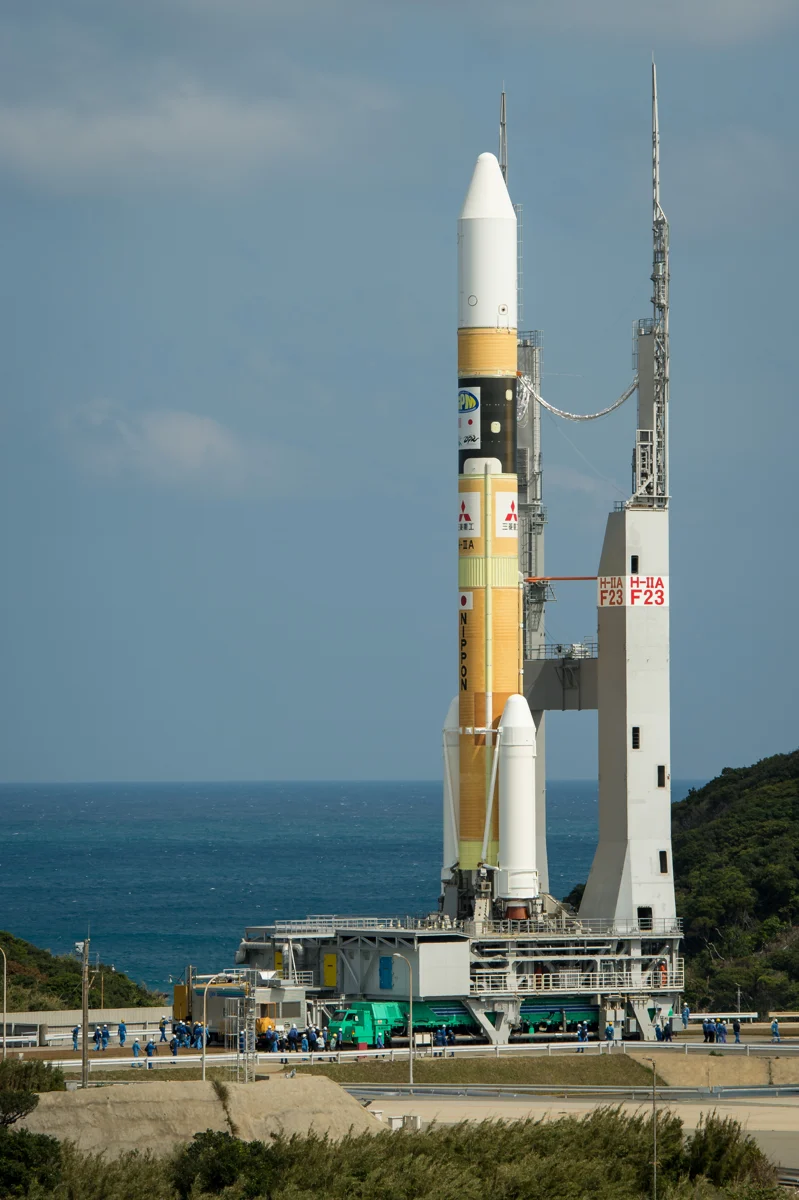
H-IIA F23 carrying GPM during rollout to the launch pad. · NASA/Bill Ingalls · Source · Public domain · Resized and converted to WebP; original proportions preserved.
A history of launches
From Tanegashima, it supports Earth observation, telecommunications and scientific research. Different versions adjust performance to the mission, without carrying astronauts.
H-IIA launches Kaguya toward the Moon and Hayabusa2 toward asteroid Ryugu. In both cases the launcher starts the journey; the spacecraft subsequently handle their own navigation and scientific work.
Missions and crews
Selected representative missions; crew names belong to the flight shown.
2007-09-14
Kaguya / SELENE
Kaguya studies the Moon's surface, topography and environment from lunar orbit.
Crew of this missionUncrewed mission
2014-12-03
Hayabusa2
Hayabusa2 departs for Ryugu on a mission to collect and return asteroid samples.
Crew of this missionUncrewed mission
Dates follow the days reported by the source agencies, generally in local time; the UTC day can differ. Crews belong to the selected missions, not every flight in the family.
What this work changed
The family supports Japanese autonomy in space and the development of precise robotic exploration missions.
First flight or first test of the family, including unsuccessful or suborbital attempts.