The launcher for Japanese cargo flights to the space station.
H-IIB is developed to carry the HTV cargo spacecraft, also called Kounotori, toward the ISS. It launches supplies and equipment; neither this rocket nor these cargo vehicles carries a crew at launch.
JapanCountry or programme
2009First flight / test
No crewed flightHuman spaceflight
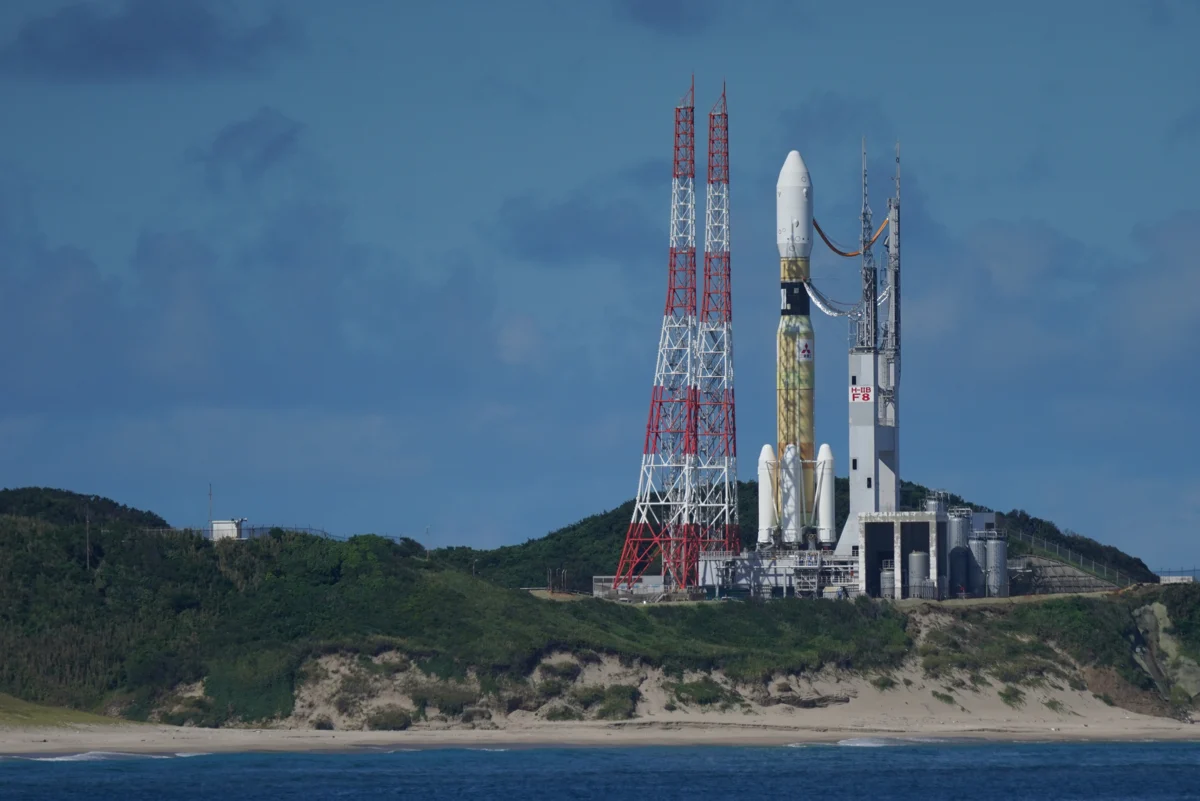
H-IIB No. 8 on its launch pad at Tanegashima. · Shinntarou · Source · CC BY-SA 4.0 · Resized and converted to WebP; original proportions preserved.
A history of launches
The first flight takes place in September 2009. It combines the launcher's demonstration with that of a vehicle able to approach the station and be captured by its robotic arm.
The series supports nine resupply missions through 2020. Astronauts unload the cargo aboard the ISS, but they arrive at the station using other vehicles.
Missions and crews
Selected representative missions; crew names belong to the flight shown.
2009-09-11
HTV-1 · démonstration
The first H-IIB launch tests the HTV cargo vehicle with nobody aboard.
Crew of this missionUncrewed mission
2020-05-21
Kounotori 9 / HTV-9
The final cargo flight in this series launches on 21 May in Japan, or 20 May UTC.
Crew of this missionUncrewed mission
Dates follow the days reported by the source agencies, generally in local time; the UTC day can differ. Crews belong to the selected missions, not every flight in the family.
What this work changed
It illustrates Japan's logistical contribution to the operation of an international space station.
First flight or first test of the family, including unsuccessful or suborbital attempts.