
Around Earth
An Earth orbit, low or highly elongated depending on the mission.
Hubble, James Webb and space observatories: complementary instruments for exploring galaxies, stars and planets.
The atmosphere blurs some images and absorbs much infrared radiation, X-rays and gamma rays. Above it, each mission opens a different window on the Universe.
An Earth orbit, low or highly elongated depending on the mission.
A region of the Sun–Earth system about 1.5 million kilometres from Earth. Observatories follow an orbit around L2.
Some missions follow heliocentric orbits, sometimes gradually drifting away from Earth.
No results. Try another word or reset the filters.
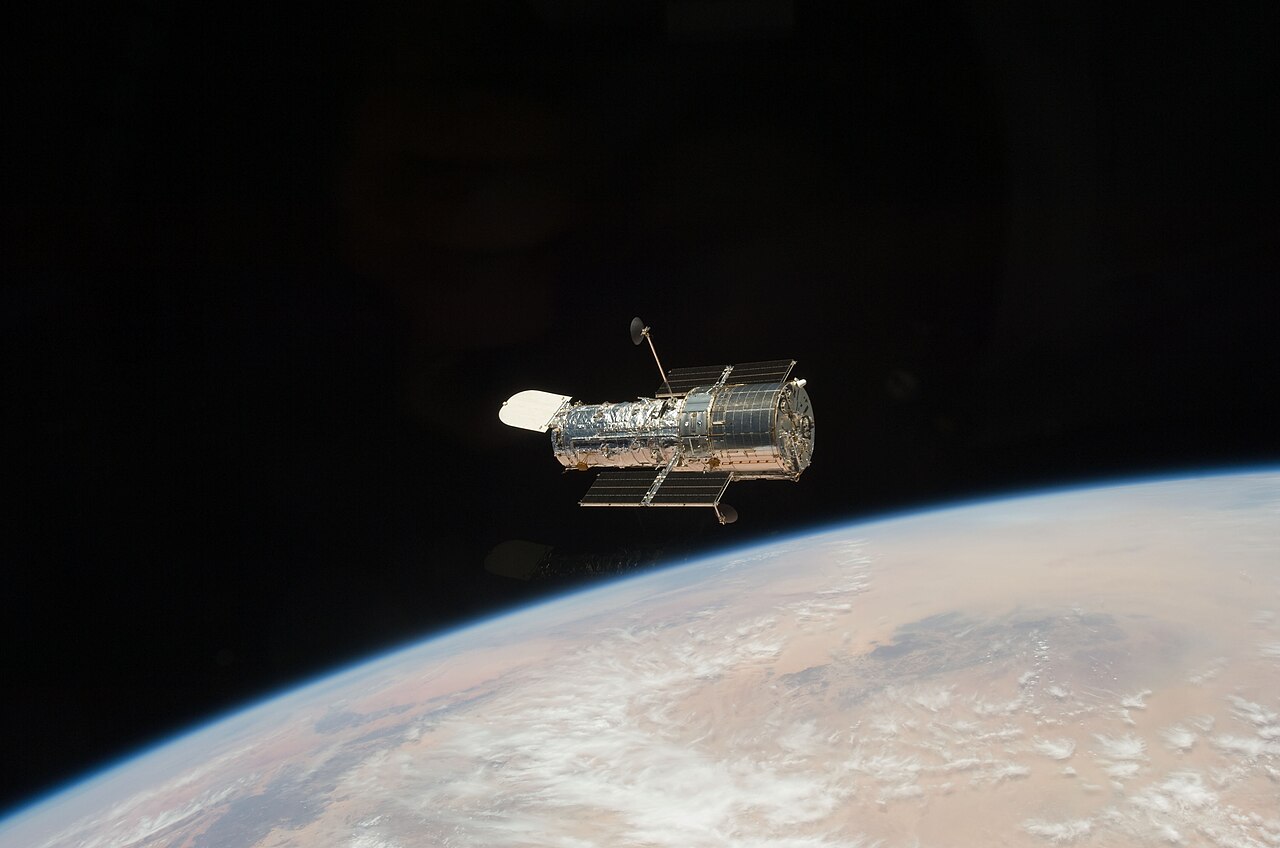
A versatile observatory upgraded through crewed servicing missions.
Its instruments include WFC3, ACS, COS and STIS.
Deep images revealed distant galaxies; its measurements refined our understanding of cosmic expansion.
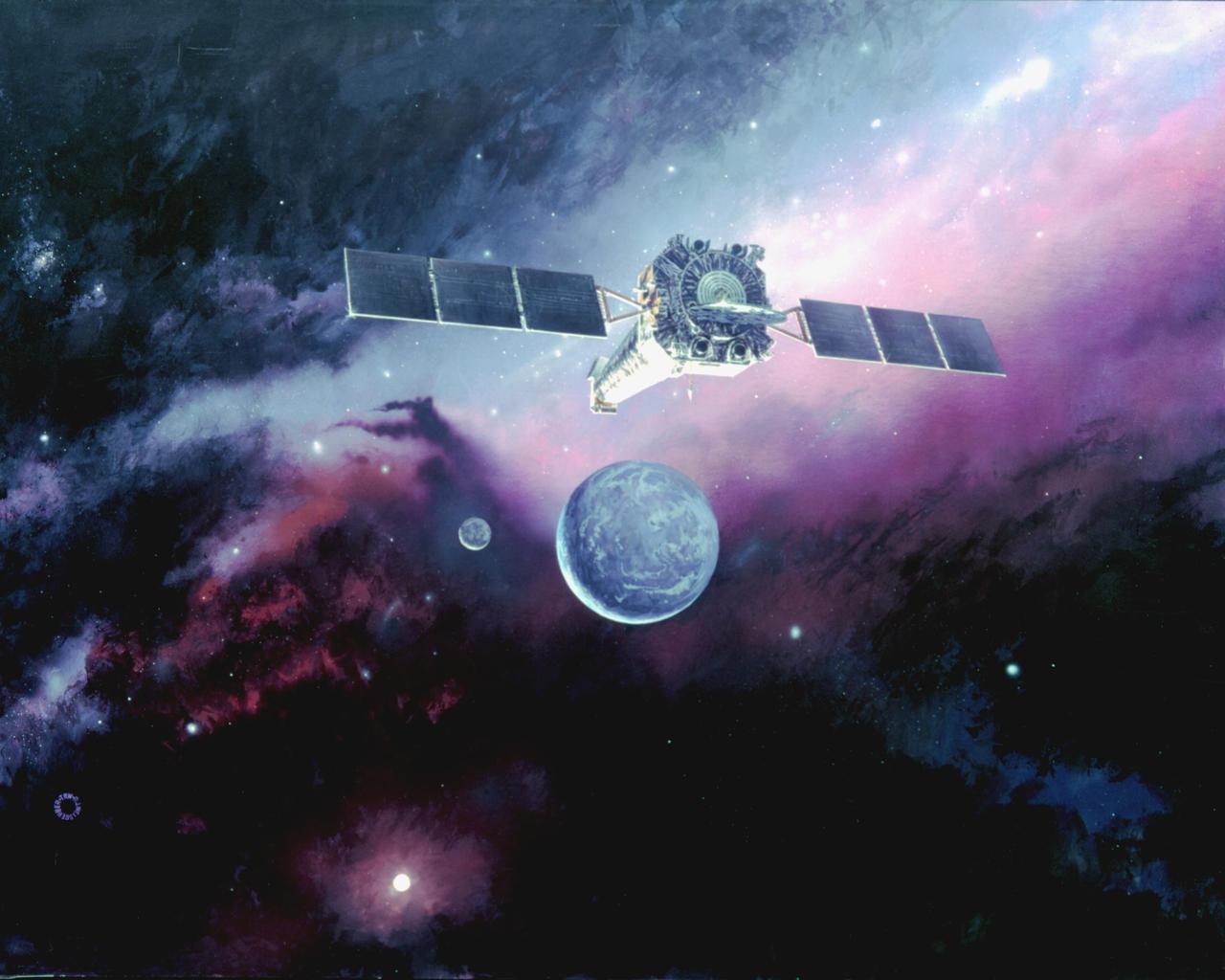
A detailed view of extremely hot regions of the Universe.
ACIS and HRC detectors, with spectroscopy gratings.
Its images and spectra reveal supernova remnants, black holes and gas in galaxy clusters.
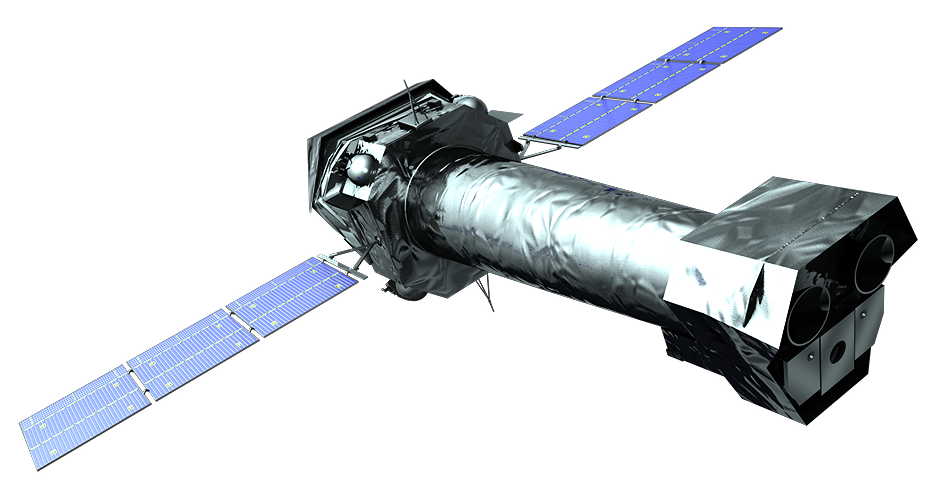
Three X-ray telescopes collect light from the hot Universe.
EPIC cameras, RGS spectrometers and the OM optical monitor.
Spectra probe hot gas and matter around black holes.
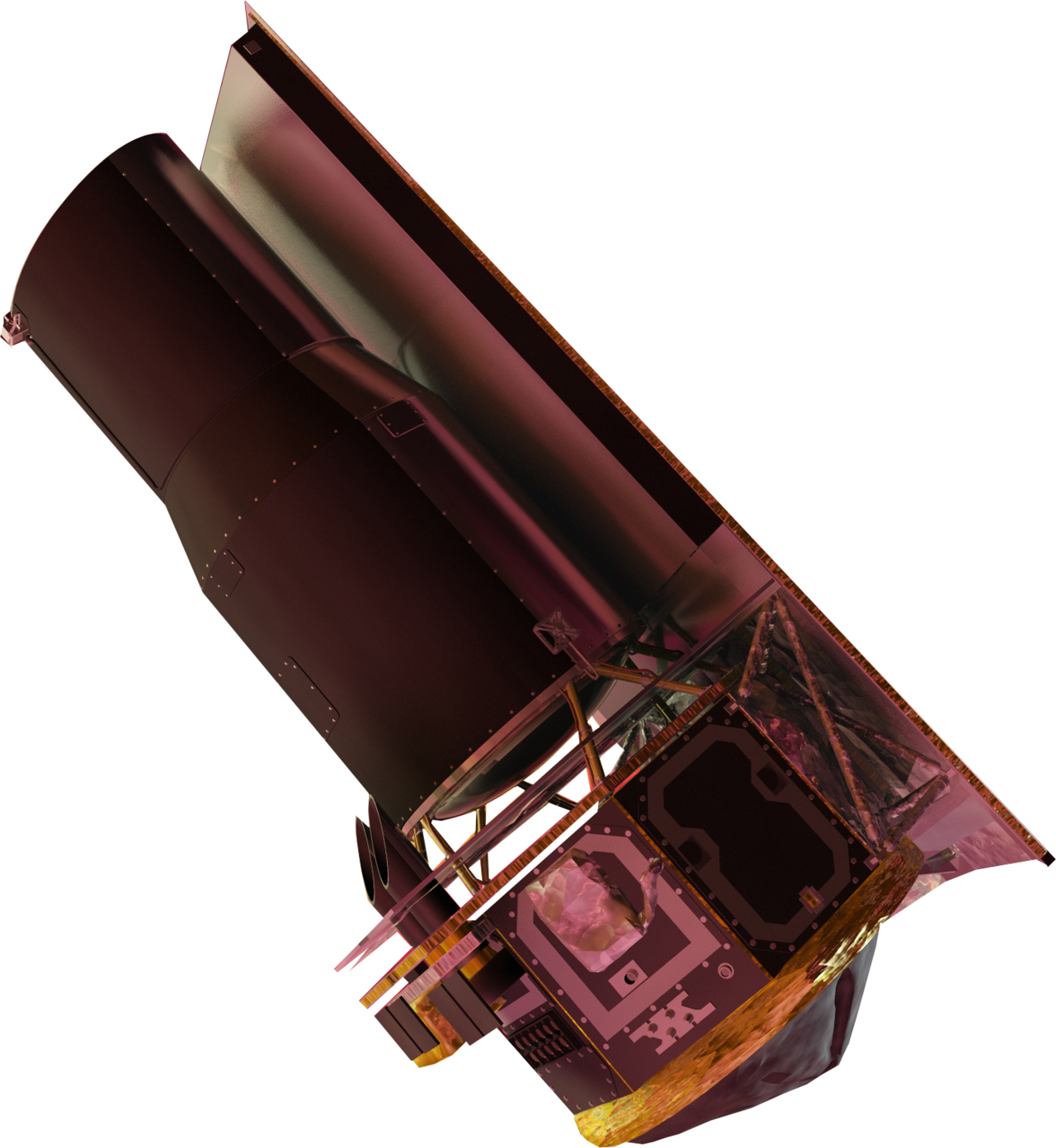
An observatory cooled to detect infrared light from celestial objects.
IRAC, IRS and MIPS; only two IRAC channels operated during the warm mission.
Its data explored forming stars, dusty galaxies and exoplanets.
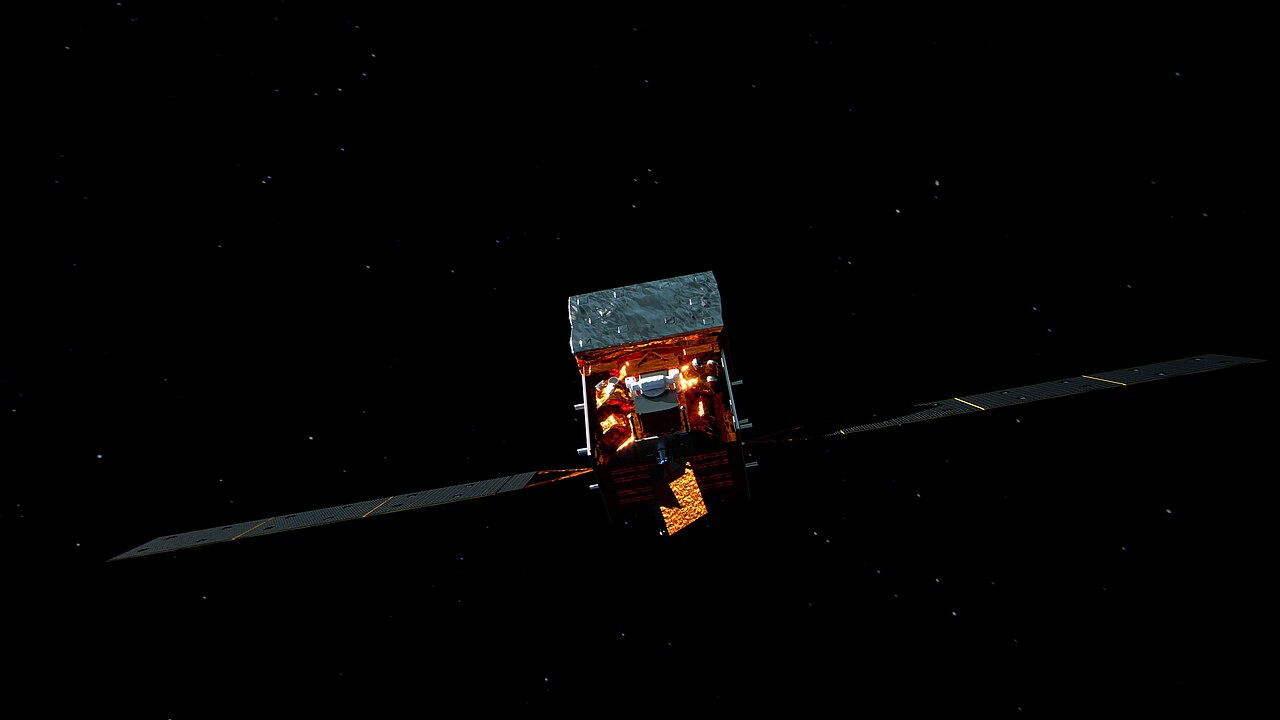
An observatory of the most energetic cosmic light.
Large Area Telescope (LAT) and Gamma-ray Burst Monitor (GBM).
It explores pulsars, jets from active galaxies and gamma-ray bursts.
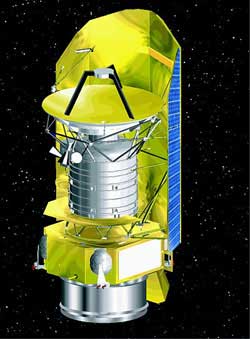
Its 3.5-metre mirror observed the cold Universe, often hidden by dust.
PACS, SPIRE and HIFI.
It studied star formation and reservoirs of gas and dust in galaxies.
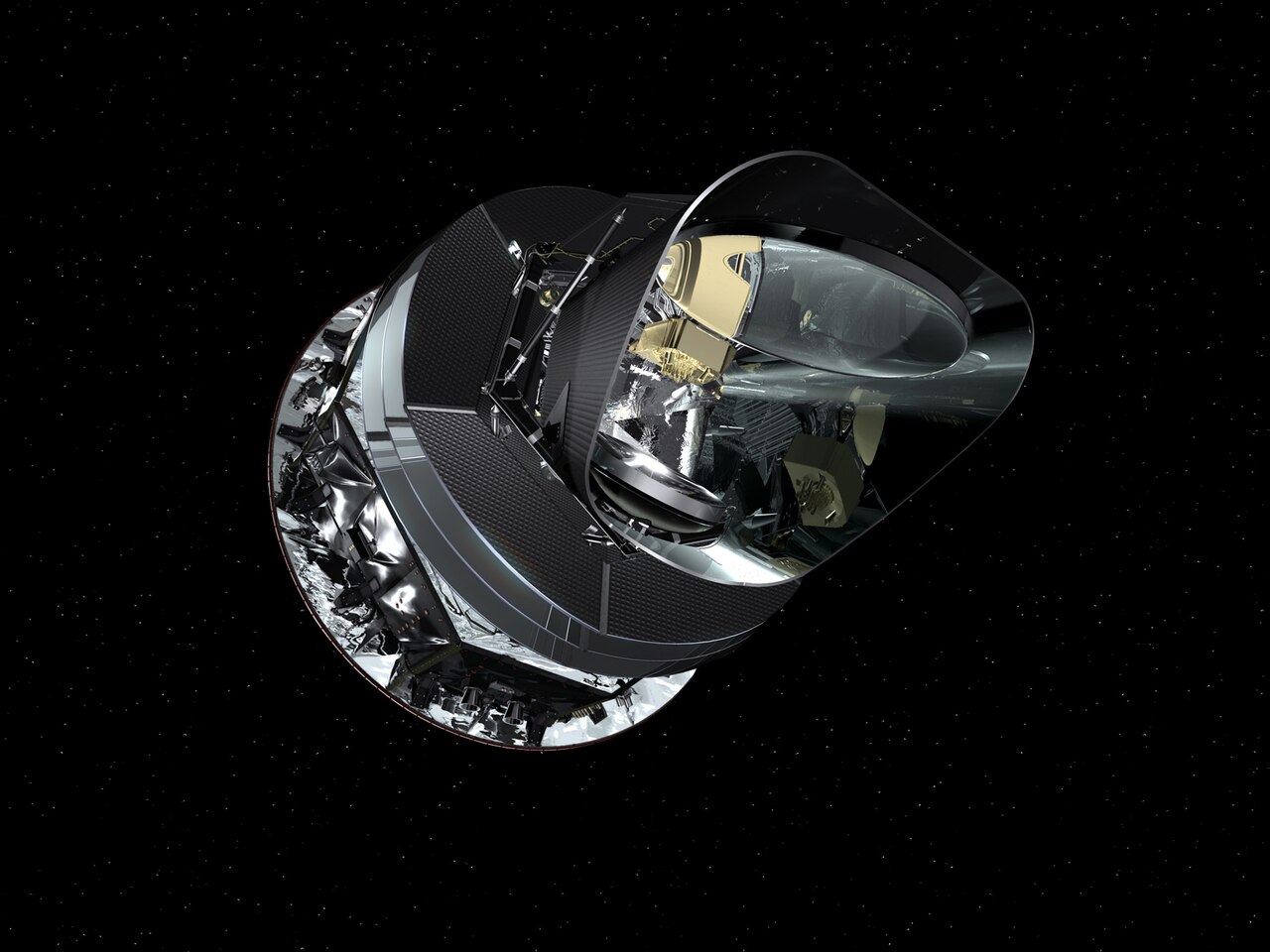
An observatory designed to measure tiny variations in the cosmic microwave background.
LFI and HFI instruments.
Its maps refined parameters describing the age, composition and evolution of the Universe.
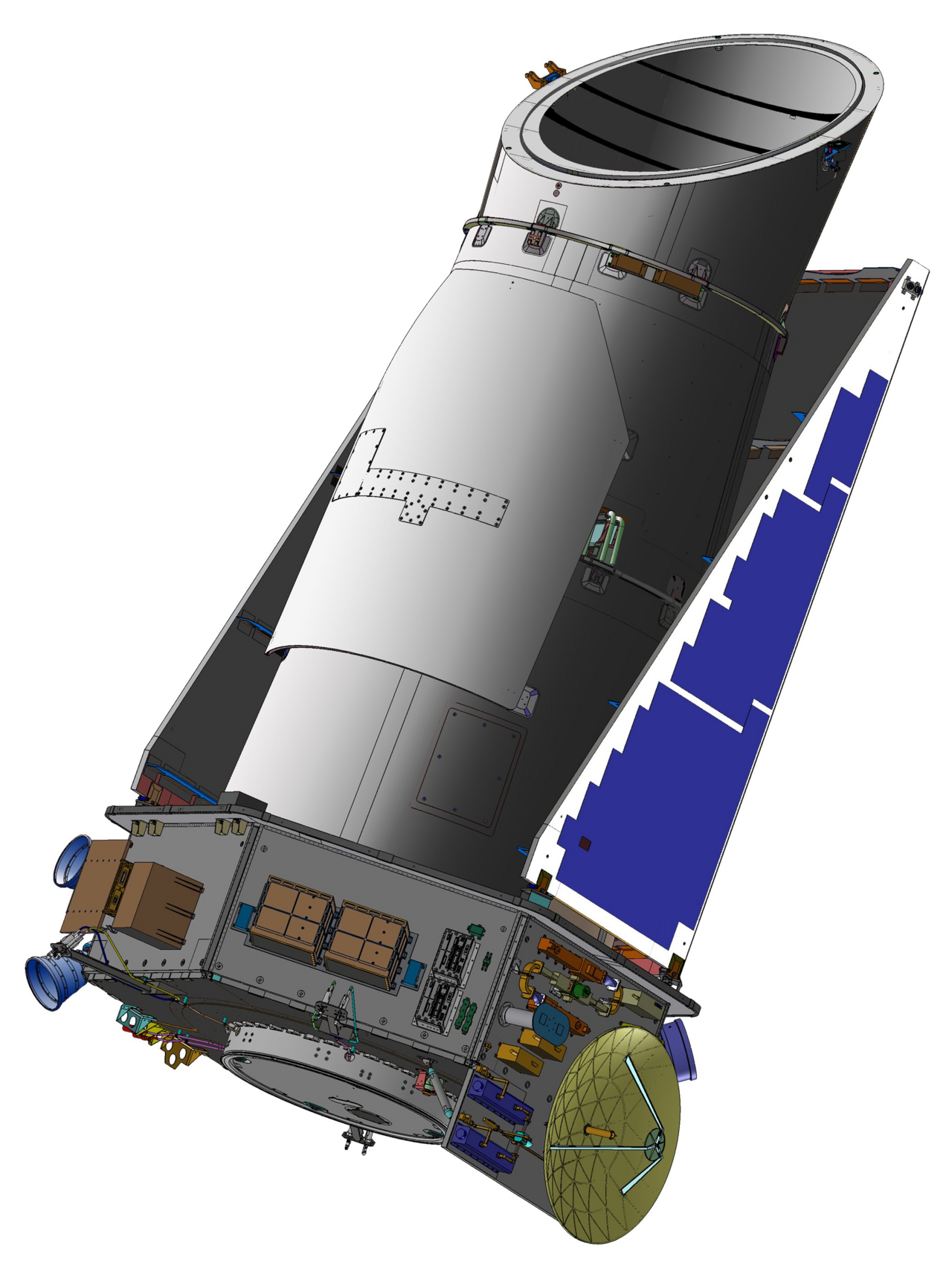
It searched for tiny dips in starlight caused by planets crossing their stars.
A photometer coupled to a Schmidt-type telescope.
Kepler showed that planetary systems are widespread in our Galaxy.
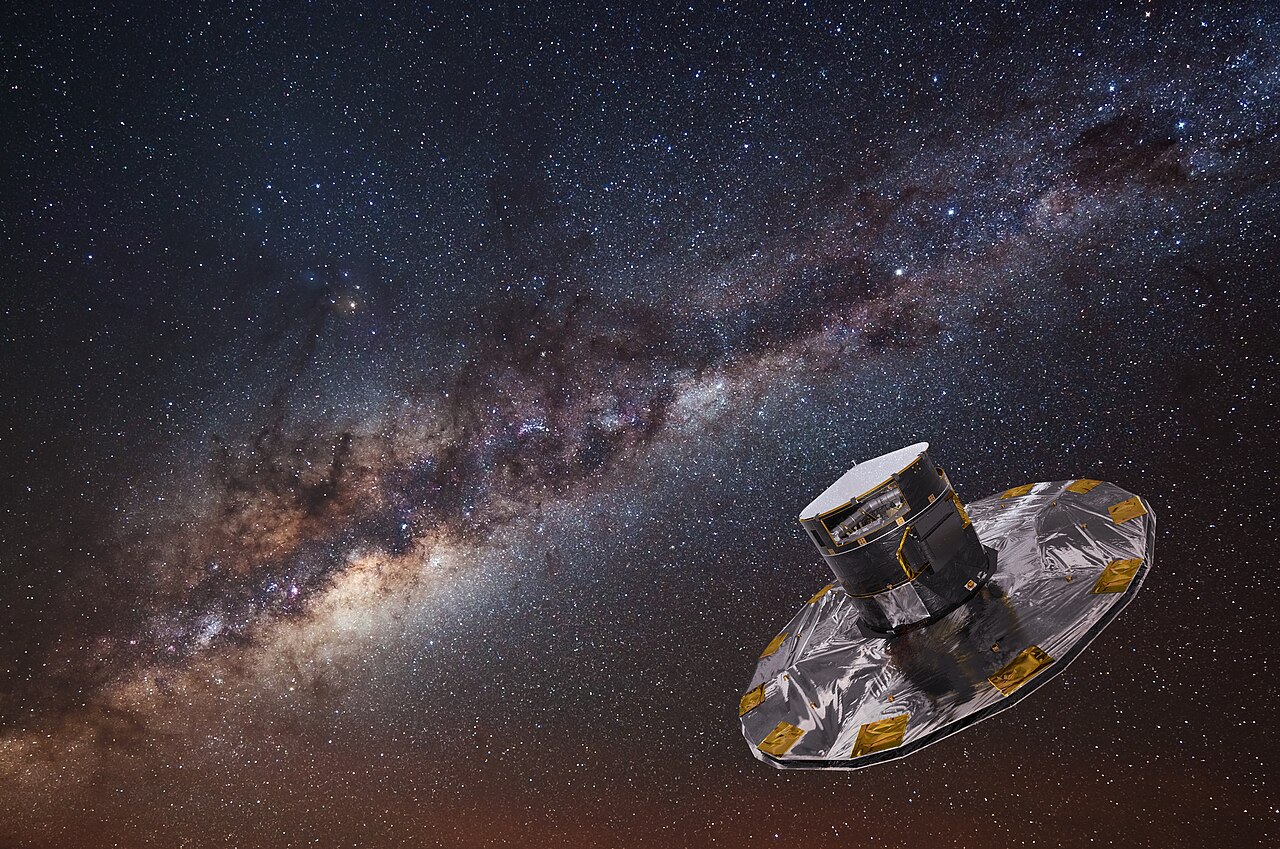
An astrometry mission measuring stellar positions, distances and motions.
Astrometric field, BP/RP photometers and RVS spectrometer.
Its catalogues reconstruct the Milky Way in three dimensions and reveal its dynamical history.
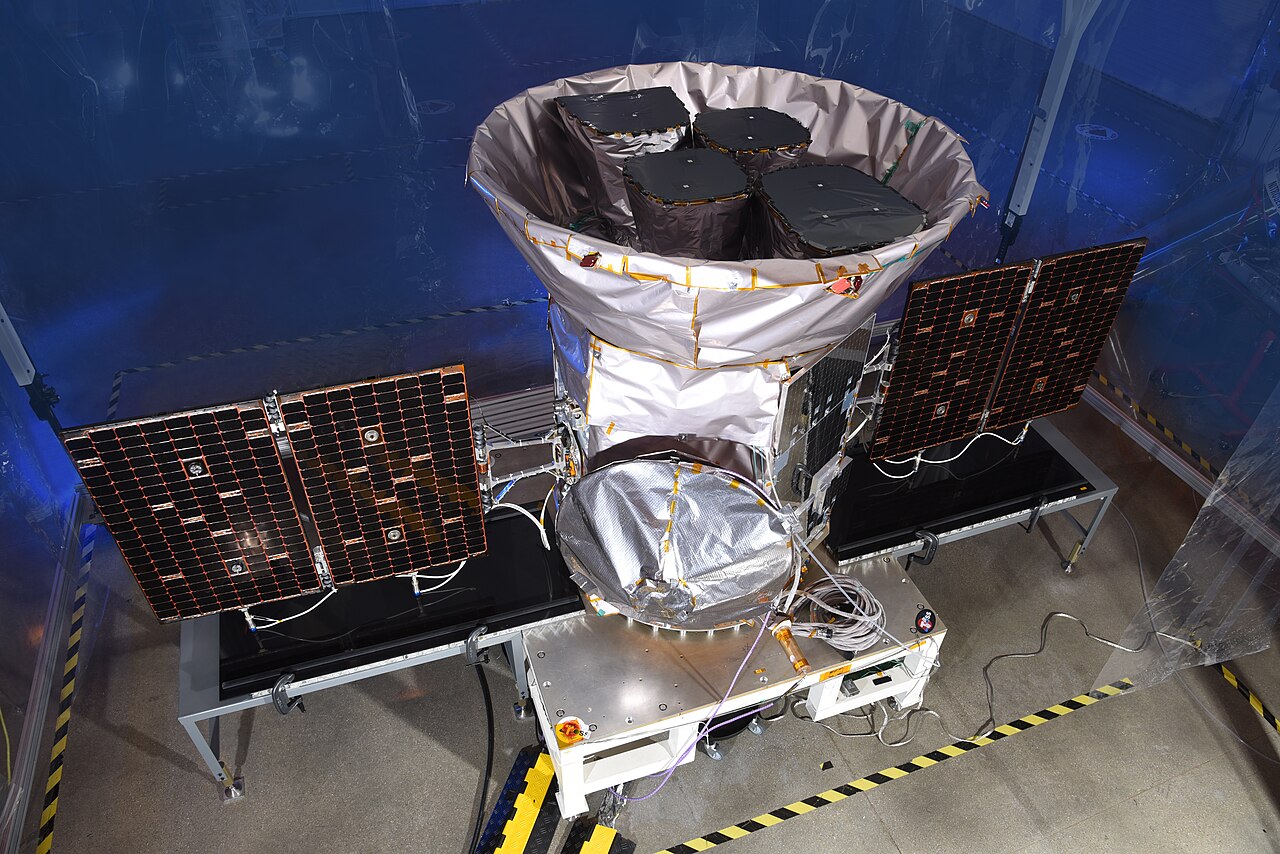
A sky survey seeking planets that cross nearby, bright stars.
Four wide-field cameras.
Its discoveries provide targets for measuring planetary masses and studying atmospheres.
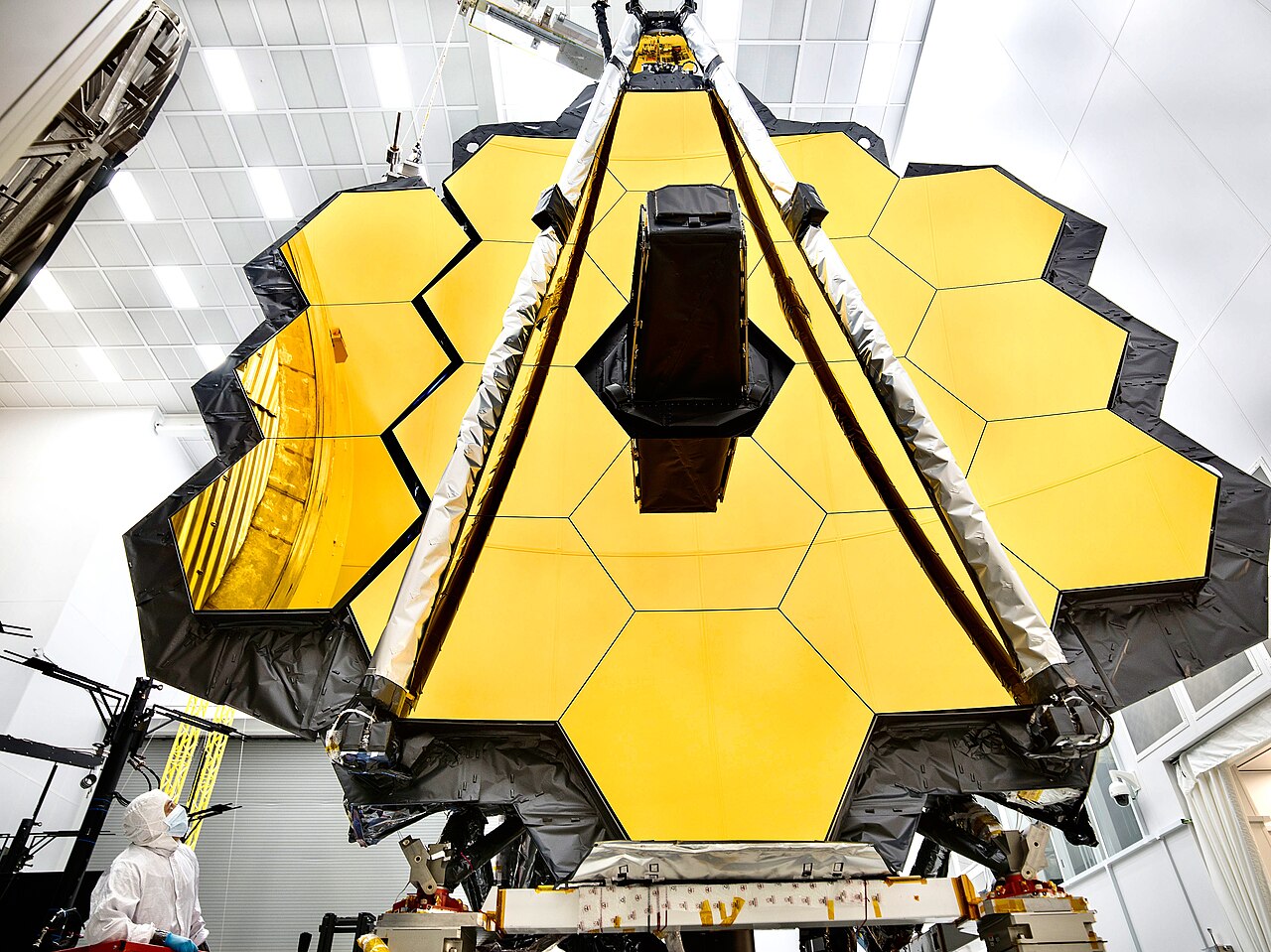
A segmented mirror and large sunshield enable infrared exploration.
NIRCam, NIRSpec, MIRI and NIRISS.
It studies early galaxies, star formation and the composition of exoplanet atmospheres.
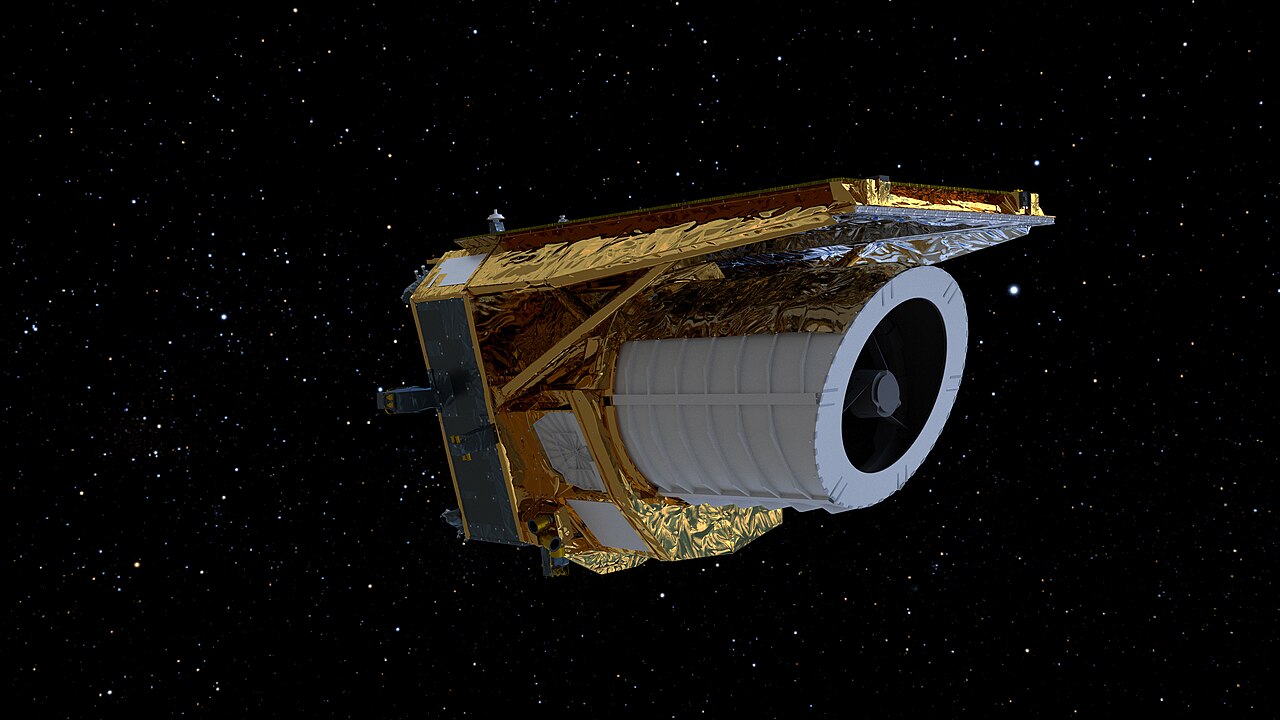
A galaxy survey designed to understand cosmic structure and expansion.
VIS camera and NISP spectrometer-photometer.
Galaxy shapes and distributions test the effects of dark matter and dark energy.
Selected historical and modern missions. Locations describe their observing orbits, not real-time tracking. The filter uses a main band; several missions cover multiple bands.
Images resized for the web. Credits, sources and licences appear below each image.


