

A life of research
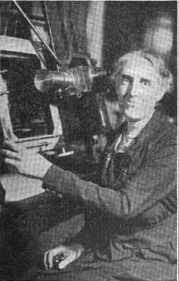
At Harvard she examined photographic plates to find stars whose brightness changed. Much of this work concerned the Magellanic Clouds, where many variable stars could be compared within the same system.
Stars in the Small Magellanic Cloud lie at approximately the same distance from Earth. This allowed her to compare their apparent brightness without large differences in distance obscuring the overall relationship.
Understanding the contribution
She identified the pattern in 1908 and refined it in 1912: Cepheids with longer periods are intrinsically brighter. Once the relationship is calibrated, measuring a star's period provides an estimate of its true luminosity.
Astronomers then compare that luminosity with the light received on Earth to calculate distance. The method became an essential step in the cosmic distance ladder and helped Hubble investigate galaxies beyond our own.