Ariane 1, 2, 3 and 4 form a European launcher lineage mainly intended for satellites. Their story is closely linked to the Guiana Space Centre near the equator.
EuropeCountry or programme
1979First flight / test
No crewed flightHuman spaceflight
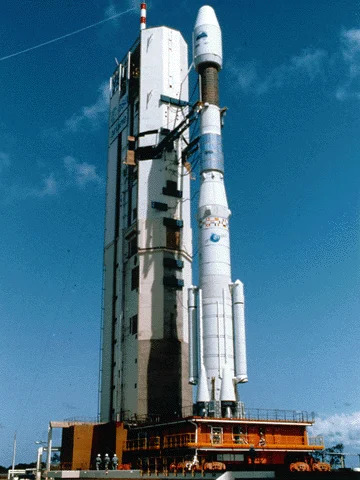
Ariane 42P prepared to launch TOPEX/Poseidon in 1992. · NASA · Source · Public domain · Resized and converted to WebP; original proportions preserved.
A history of launches
Ariane 1's successful debut on 24 December 1979 gives Europe an independent launch capability. Later generations progressively increase payload capacity and the flexibility of available missions.
Introduced in 1988, Ariane 4 becomes a major vehicle for commercial telecommunications. Its different configurations combine a central vehicle with boosters selected to suit the payload.
Missions and crews
Selected representative missions; crew names belong to the flight shown.
1979-12-24
Ariane 1 · L01
The first Ariane launch succeeds from Kourou after several delays during the test campaign.
Crew of this missionUncrewed mission
1988-06-15
Ariane 4 · V22
Ariane 4's first flight carries satellites including Meteosat-P2 and PanAmSat-1, with no people aboard.
Crew of this missionUncrewed mission
Dates follow the days reported by the source agencies, generally in local time; the UTC day can differ. Crews belong to the selected missions, not every flight in the family.
What this work changed
This family establishes lasting European industrial cooperation and prepares the transition to Ariane 5.
First flight or first test of the family, including unsuccessful or suborbital attempts.