

A life of research
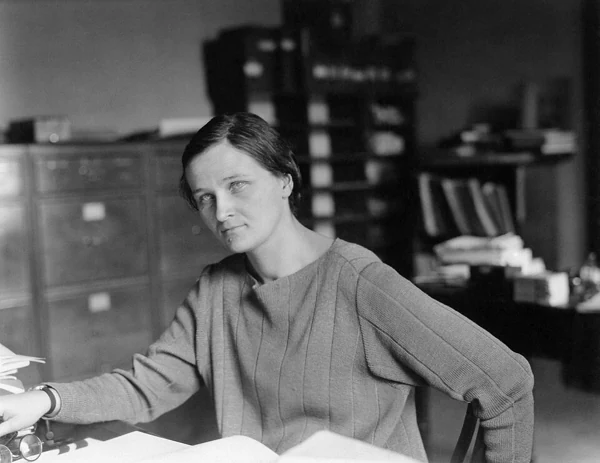
Born in England, she studied at Cambridge before moving to the United States to conduct research at Harvard. Her 1925 doctoral thesis, awarded through Radcliffe, transformed the interpretation of stellar light.
She built a long career at Harvard, although formal academic recognition came slowly. In 1956 she became a full professor and took charge of the astronomy department after decades of scientific work.
Understanding the contribution
She applied the physics of ionisation to spectral lines. A strong line does not simply mean that an element is abundant: its visibility also depends on temperature and the electrical state of the atoms.
Her analysis revealed an enormous abundance of hydrogen in stars. The conclusion initially seemed so surprising that it was expressed cautiously. Subsequent work, including research by Henry Norris Russell, confirmed the essential result.