
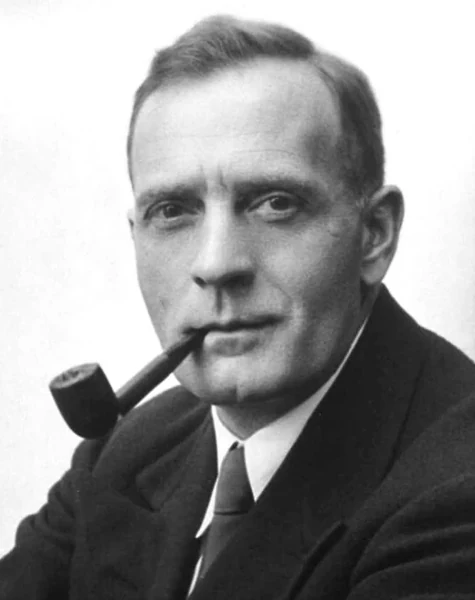

A life of research
Educated in Chicago and Oxford, he worked at Mount Wilson Observatory. Its large Hooker telescope allowed him to investigate faint objects in much greater detail than smaller instruments could provide.
He identified Cepheid variables in the Andromeda Nebula and used Leavitt's relationship to estimate their distances. Results announced in 1924 placed this system far beyond the boundaries of the Milky Way.
Understanding the contribution
In 1929 he presented a relationship between galaxy distance and recession velocity. The study depended on collective work, particularly spectral shifts measured by Vesto Slipher and observations by Milton Humason.
The relationship fitted a theoretical framework already developed by Georges Lemaître. It supported a dynamic picture of the cosmos: on large scales, distances between galaxies not gravitationally bound to each other increase with time.