
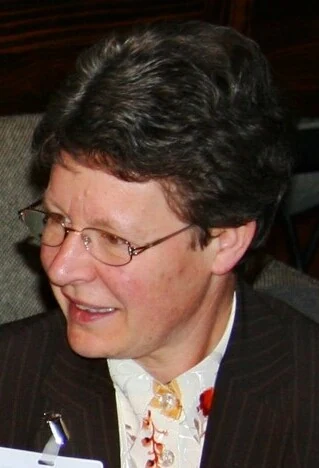

A life of research
Born in Northern Ireland, she studied in Glasgow and became a doctoral student in Cambridge under Antony Hewish. She helped build a radio telescope designed to investigate rapid variations in radio sources.
The instrument produced long strips of recordings, which she inspected carefully. In 1967 she noticed an unusual signal and returned to investigate whether it repeated and had an astronomical origin.
Understanding the contribution
The highly regular pulses, reported in 1968, revealed a new class of objects. They were subsequently explained as neutron stars whose radio beams sweep across Earth like the beam of a lighthouse.
Pulsars provide exceptionally precise natural clocks. Their study allows astronomers to test gravity, investigate extremely dense matter and measure the movements of stellar systems in detail.