
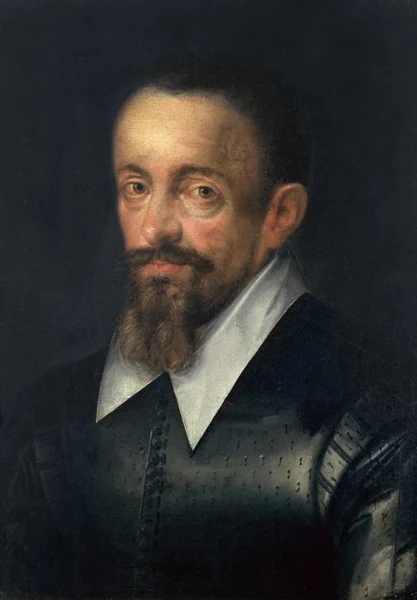

A life of research
Educated in Tübingen, he worked in Graz and then with Tycho Brahe in Prague. He gained access to exceptionally precise observations, crucial to his investigation of Mars.
Religious conflict and financial difficulties marked his career. Nevertheless, he continued researching orbits, optics and astronomical tables, seeking mathematical order in the heavens.
Understanding the contribution
In 1609 he established that planets follow ellipses with the Sun at one focus. A line joining planet and Sun sweeps equal areas in equal times, meaning orbital speed changes.
His third law, published in 1619, links the square of the orbital period to the cube of the semi-major axis. These relations described the observations; Newton later explained their gravitational origin.