
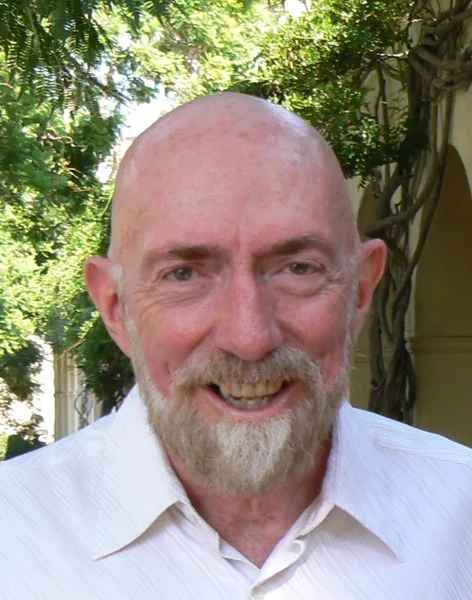

A life of research
Born in the United States, he studied at the California Institute of Technology and Princeton before returning to Caltech. His research concerns general relativity, black holes and the behaviour of matter in intense gravity.
He played a founding role in LIGO with Rainer Weiss and Ronald Drever. Decades of collective work were needed to measure extraordinarily small changes in distance using laser beams.
Understanding the contribution
Systems such as two approaching black holes disturb spacetime and emit gravitational waves. Theory and numerical calculations allow researchers to recognise these signatures in measurements and infer the properties of their sources.
LIGO's first directly detected signal was recorded in September 2015 and announced in 2016. It came from the merger of two black holes, opening a form of astronomy complementary to observations of electromagnetic radiation.