
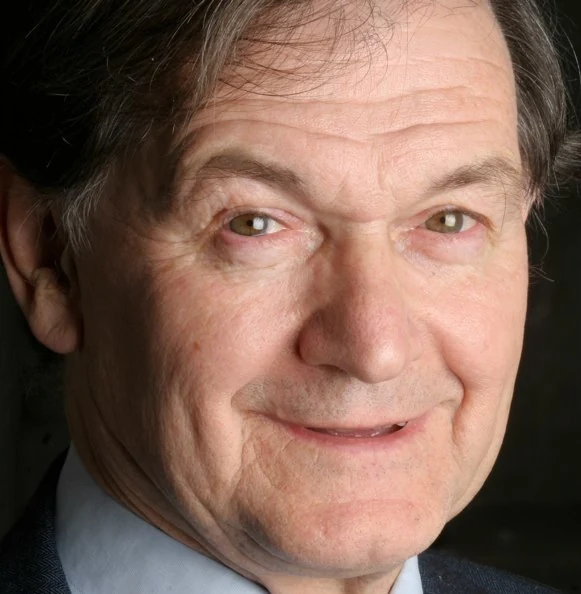

A life of research
Born in England, he studied mathematics in London and Cambridge. His scientific career brought together geometry, relativity and new ways of representing the structure of spacetime.
He developed tools for investigating the global properties of a spacetime without calculating every detail of a particular solution to Einstein's equations. This approach made a wider range of physical questions accessible.
Understanding the contribution
In 1965 he proved a singularity theorem for gravitational collapse under specified assumptions. The result did not require the collapsing star to maintain perfect spherical symmetry, giving black hole theory a much firmer foundation.
A singularity here indicates a limit of the classical description, including the inability to extend certain trajectories. It does not by itself establish what matter actually does at every physical scale.