
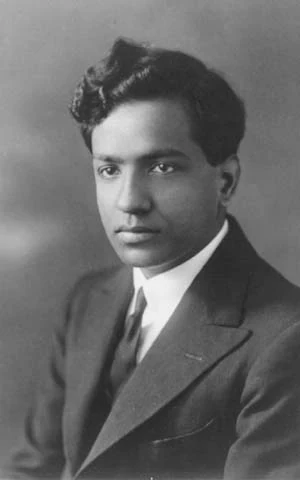

A life of research
Born in Lahore, then part of British India, he studied in Madras and moved to Cambridge in 1930. He later developed a long scientific career at the University of Chicago.
His mathematically demanding research covered stellar structure, the transfer of radiation, stellar dynamics and black holes. He repeatedly returned to the physical foundations underlying the models he investigated.
Understanding the contribution
In a white dwarf, resistance to collapse comes mainly from a quantum effect called electron degeneracy pressure. By including relativity in the calculation, Chandrasekhar showed that this support has a limiting mass.
In the usual case the limit is approximately 1.4 times the Sun's mass. It concerns the white dwarf itself, not directly the original mass of its parent star. Above it, another state or a destructive event must be considered, depending on circumstances.