
Welcome to Universum.luUniversum · The astronomy portal
The portal / William Herschel · Great figures
From new planets to invisible light

William Herschel

1738–1822

Herschel discovered Uranus and infrared radiation. With Caroline Herschel, he developed systematic exploration of the deep sky using large telescopes built in their own workshop.

← Back to all portraits
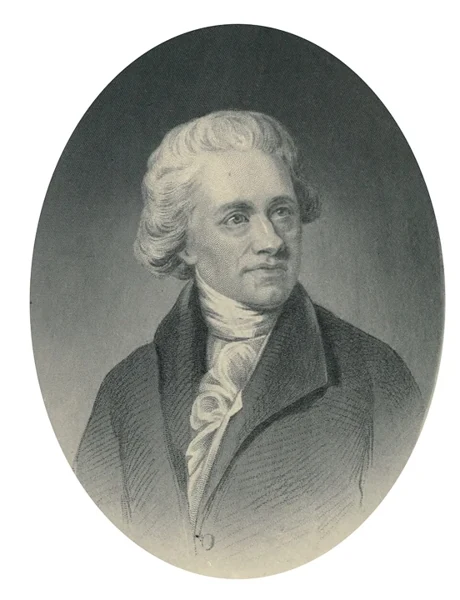
William Herschel
Portrait reproduced in Edward S. Holden’s Sir William Herschel, His Life and Works (1881).
Edward Singleton Holden, 1846-1914 · Public domain · Portrait source
Resized and converted to WebP for this site.

A life of research

Born in Hanover, he moved to England and initially earned his living as a musician. Astronomy gradually became the centre of his working life.

He ground mirrors and built powerful instruments. Caroline contributed observations, calculations and catalogues: their enterprise depended on shared scientific labour rather than a lone observer.

Understanding the contribution

In 1781 he observed the object recognised as Uranus, the first planet added to the five known since antiquity. His surveys of nebulae and clusters greatly expanded the celestial inventory.

In 1800 a thermometer placed beyond the red end of the solar spectrum registered heating. He thereby detected radiation invisible to the eye, now called infrared.

What this work changed

His career demonstrates how better instruments can reveal both new worlds and entirely new ways of observing them.

Sources and references