
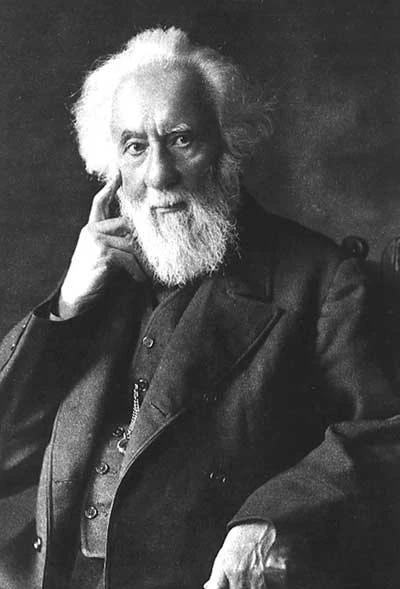

A life of research
Born in London, he established a private observatory and attached a spectroscope to his telescope. With chemist William Allen Miller, he compared stellar lines with the signatures of substances studied in laboratories.
After their marriage in 1875, Margaret Lindsay Huggins became a vital collaborator, especially in photographic techniques. Their joint research extended spectral work beyond what could be recorded directly by eye.
Understanding the contribution
In 1864 Huggins observed isolated bright lines in some nebulae. These showed that the objects contained luminous gas, unlike the continuous spectra crossed by dark lines seen in many stars. The word nebula therefore covered physically different objects.
He also investigated motion through shifts in spectral lines, using the Doppler effect. Light could provide information about the physical properties of objects that nobody could visit.