The portal / Mercury-Redstone · Rockets and astronauts
Suborbital flights
Mercury-Redstone
America’s first human leaps into space
Mercury-Redstone enabled two human suborbital flights in 1961. Reaching space did not yet mean gaining enough speed to remain in orbit.
United StatesCountry or programme
1960First flight / test
Has carried humansHuman spaceflight
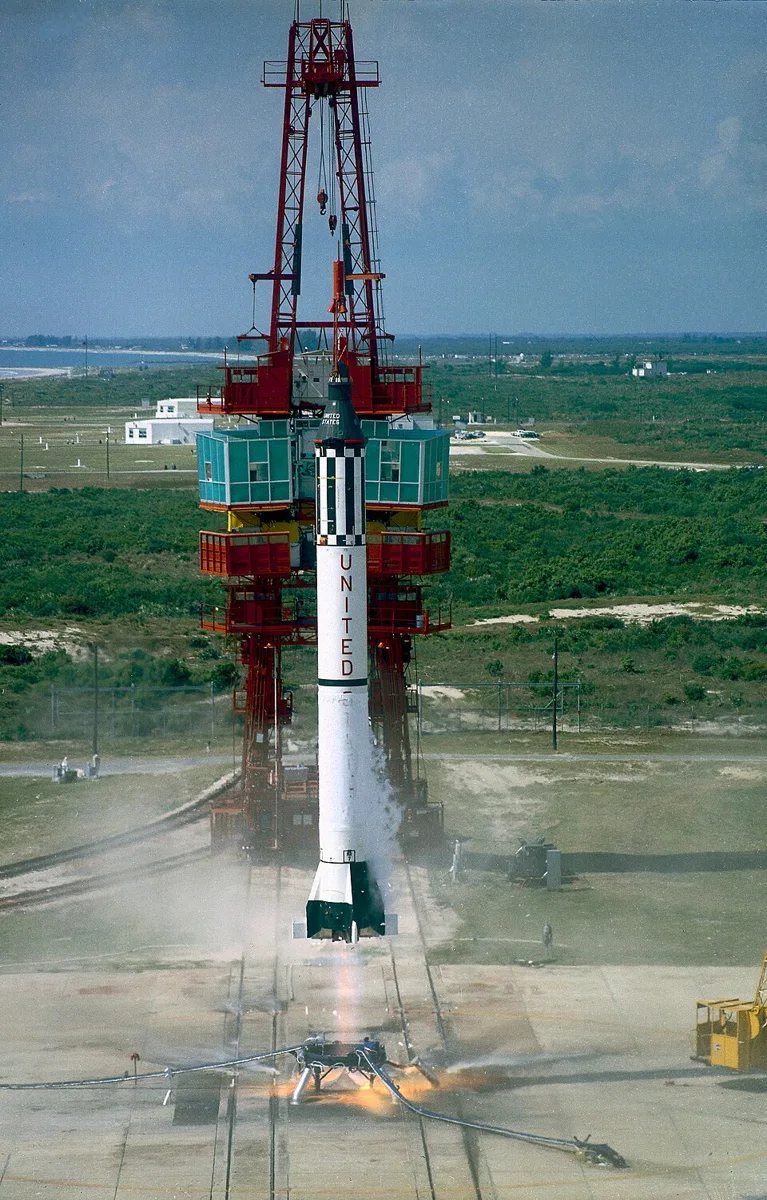
Mercury-Redstone 3 · Freedom 7 · 1961 · NASA · Source · Public domain · Image resized and converted to WebP.
A history of launches
NASA adapted the Redstone missile to the small Mercury spacecraft with additional safety requirements. Testing of the complete system began in 1960.
Alan Shepard and then Gus Grissom made short flights over the Atlantic. They tested the cabin, controls and recovery procedures before the orbital Atlas missions.
Missions and crews
Selected representative missions; crew names belong to the flight shown.
1961-05-05
Mercury-Redstone 3 · Freedom 7
Shepard became the first American in space during a flight lasting approximately fifteen minutes.
Crew of this missionAlan Shepard
1961-07-21
Mercury-Redstone 4 · Liberty Bell 7
Grissom completed the second crewed flight; his capsule sank after splashdown, but he was rescued.
Crew of this missionVirgil « Gus » Grissom
Dates follow the days reported by the source agencies, generally in local time; the UTC day can differ. Crews belong to the selected missions, not every flight in the family.
What this work changed
These missions bridged automated testing and American crewed orbital exploration.
First flight or first test of the family, including unsuccessful or suborbital attempts.