The portal / R-7 / Spoutnik · Rockets and astronauts
Pioneering launchers
R-7 / Spoutnik
The family that opened the orbital age
Derived from a Soviet intercontinental missile, the R-7 became the starting point for a remarkably long-lived family of space launchers.
USSRCountry or programme
1957First flight / test
No crewed flightHuman spaceflight
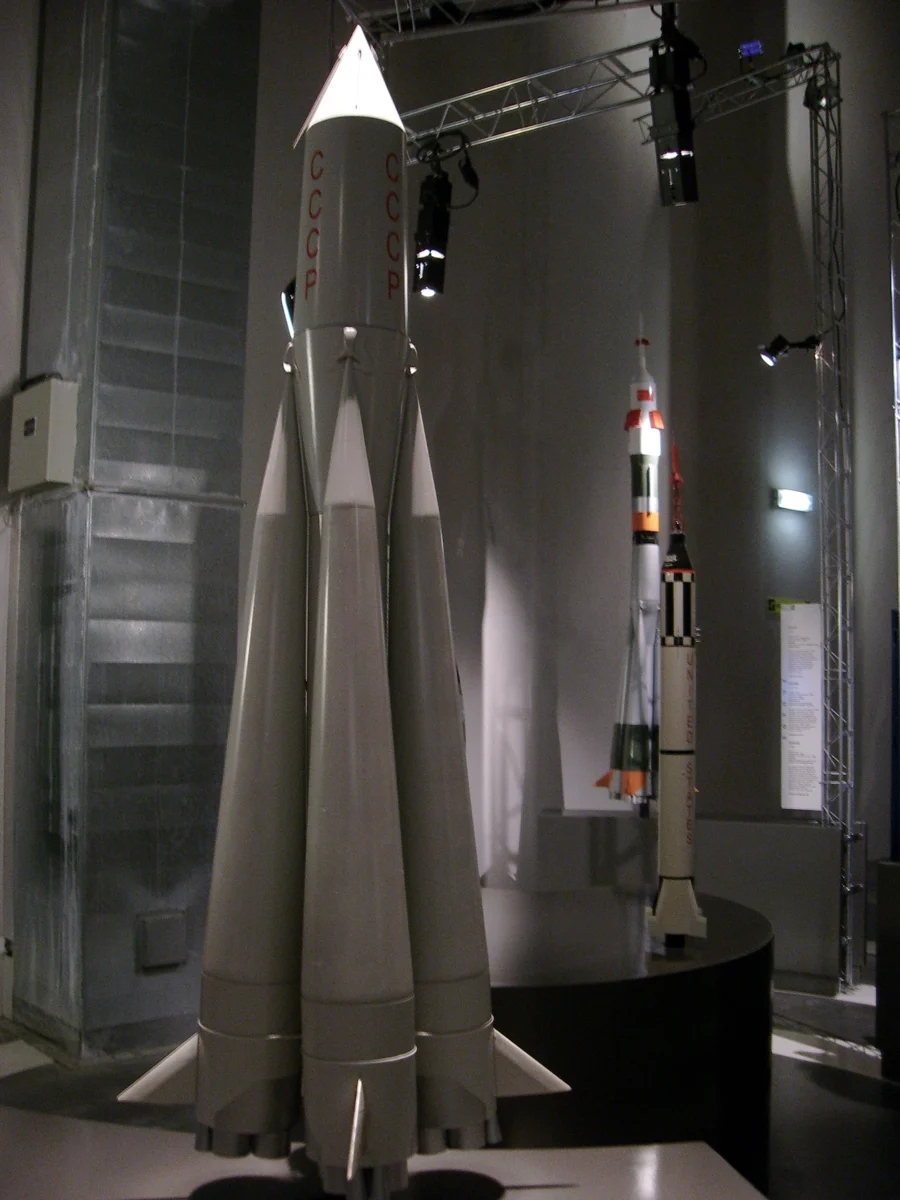
Sputnik launcher model exhibited at La Coupole. · Between a Rock · Source · CC BY 2.0 · Resized and converted to WebP; original proportions preserved.
A history of launches
Sergei Korolev’s team adapted the rocket to place a satellite in orbit. After difficult early tests, Sputnik 1 launched on 4 October 1957: an artificial object circled Earth for the first time.
Sputnik 2 followed a month later with the dog Laika. The spacecraft had no return system, and the animal did not survive the flight.
Missions and crews
Selected representative missions; crew names belong to the flight shown.
1957-10-04
Spoutnik 1
The first artificial satellite transmitted its famous radio signals from Earth orbit.
Crew of this missionUncrewed mission
1957-11-03
Spoutnik 2
Laika became the first animal in orbit; no human cosmonaut flew on this mission.
Crew of this missionUncrewed mission
Dates follow the days reported by the source agencies, generally in local time; the UTC day can differ. Crews belong to the selected missions, not every flight in the family.
What this work changed
Sputnik’s success made spaceflight a worldwide scientific and political issue.
First flight or first test of the family, including unsuccessful or suborbital attempts.