
A rocky planet
Mars is the fourth planet from the Sun. Its mean diameter is about 6,780 km, a little over half Earth’s. Dust containing iron oxides gives its surface a reddish colour.
A red world, vast landscapes and traces of a history shaped by water.
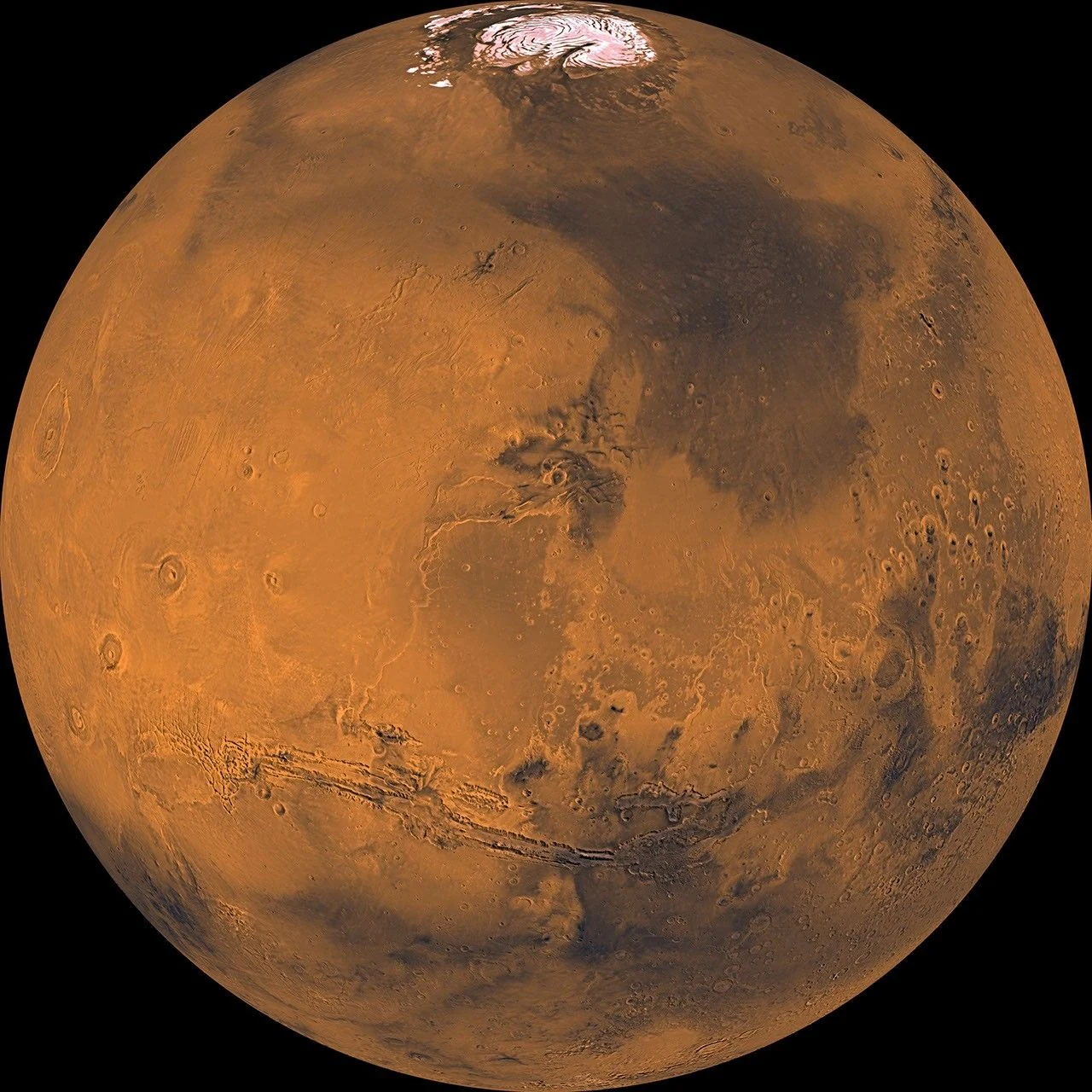
Mars is the fourth planet from the Sun. Its mean diameter is about 6,780 km, a little over half Earth’s. Dust containing iron oxides gives its surface a reddish colour.
Valleys, deltas, sedimentary rocks and minerals record ancient environments where liquid water existed. Water ice occurs at the poles and underground. This evidence does not mean that life has been discovered.
The atmosphere consists mainly of carbon dioxide. Mars is cold and dry, with low surface pressure. Rover landscapes may resemble terrestrial deserts, but the conditions are very different.
Volcanoes, canyons and craters: get to know some of the red planet’s great landscapes.
Choose a time and location, then prepare to observe an orange point of light or a small telescopic disk.
An almost Earth-length day, an almost twice-as-long year and seasons unlike our own.
Two small, irregular moons accompany Mars. Their history remains an open question.
From the first images to mobile laboratories: milestones in robotic exploration.
Space-mission images; mosaics and processing are identified in the credits. NASA/JPL · Image use
Educational reference values and sources checked on 23 October 2026.